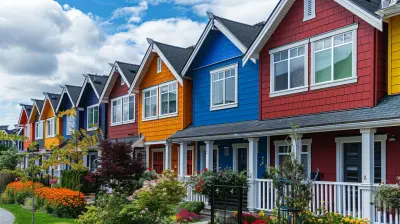
How Real Estate Is Adapting to Sustainable Living
20 October 2026
Sustainable living used to be the real estate equivalent of a guy with a compost bin and a Prius. Nice for him. Irrelevant to everyone else. Today it is a force reshaping what gets built, what gets bought, and what gets stuck on the market because nobody wants to pay for someone else's solar panels.
I have spent years watching this shift from inside the industry, and I want to give you the version you will not get from a glossy developer brochure. Sustainability in real estate is not one trend. It is a messy, uneven, occasionally hypocritical adaptation that is happening at different speeds in different markets. Some of it is genuinely smart. Some of it is green paint on a cheap wall. Your job, whether you are buying, selling, building, or lending, is telling the difference.
Let us get into it.

What Sustainable Living Actually Means in Real Estate
The word "sustainable" gets thrown around so loosely that it has almost lost meaning. In practical real estate terms, it usually refers to three overlapping things:- Operational efficiency. The building uses less energy and water. Better insulation, heat pumps, LED lighting, smart thermostats, low-flow fixtures.
- Material and construction choices. Recycled or low-carbon materials, responsible sourcing, waste reduction during the build.
- Location and lifestyle. Walkability, transit access, proximity to services, which reduces car dependence.
Notice that only the first two are things you can bolt onto a building. The third is baked into where the building sits, and it is the one buyers consistently undervalue until gas prices spike.
Here is the uncomfortable truth: most "sustainable" listings emphasize the visible stuff (solar panels, bamboo floors) and ignore the invisible stuff (envelope quality, ventilation, drainage). The invisible stuff matters more. A house with excellent insulation and a boring roof will outperform a house with a flashy solar array and leaky windows almost every time. But the flashy stuff photographs better, so that is what you see.

Why the Market Shifted From Nice-to-Have to Real Money
Three forces pushed sustainability from a niche preference into a mainstream financial consideration.First, operating costs got real. Energy price volatility stopped being an abstract concern and became a monthly bill people actually feel. When a buyer compares two similar homes and one has a projected utility cost that is meaningfully lower, that difference shows up in their budget conversation immediately. Real estate agents who still ignore utility costs are leaving negotiation leverage on the table.
Second, insurance and lending started paying attention. Insurers increasingly care about physical risk: flood exposure, wildfire risk, hail, heat. Lenders care about anything that threatens collateral value over 30 years. This is slower and less dramatic than the headlines suggest, but it is happening. In some markets, a property's resilience features now affect insurability and therefore financing. That is a bigger deal than any marketing label.
Third, regulation arrived quietly. Building energy codes have tightened in many jurisdictions. Disclosure requirements around energy performance exist in a growing number of places. Appliance and equipment efficiency standards have shifted what gets installed by default. You do not need a policy briefing to feel this. You feel it when your contractor tells you the old unit is no longer available.
The result is that sustainability moved from the "preferences" column to the "dollars and cents" column. That is why it stuck this time.

The Building Envelope Is the Boring Hero
If you remember one thing from this article, make it this: the building envelope (walls, roof, windows, foundation, air sealing) does more for real sustainability than any gadget you can name.Why? Because the cheapest energy is the energy you never use. A well-sealed, well-insulated building needs a smaller heating and cooling system, runs it less often, and stays comfortable through temperature swings. Every downstream decision gets easier and cheaper.
This is also where the biggest gap between marketing and reality lives. Upgrading an envelope is expensive, invisible, and hard to photograph. So it gets skipped in favor of visible features. A buyer touring a home sees the induction cooktop and the EV charger. They do not see the air sealing detail at the rim joist, which is exactly where a lot of heat escapes.
Practical advice: When evaluating any property, ask for the age and condition of windows, insulation levels where known, and whether a blower door test has ever been done. If the seller does not know, that tells you something. A home energy assessment is cheap relative to a home purchase and will tell you more about future costs than any listing description.

Heat Pumps, Solar, and the Economics Nobody Explains
Heat Pumps
Heat pumps are the workhorse of modern efficiency. They move heat rather than generate it, which is why they can deliver more heating energy than the electricity they consume. In mild and moderate climates they are a clear win. In very cold climates, cold-climate models exist and work, but sizing and backup decisions matter more, and a bad installation will erase the savings.The common mistake: replacing a furnace with a heat pump without addressing the envelope or the ductwork. You get an expensive system working hard against a leaky house. Fix the shell first, then size the system. Contractors who skip this step are selling equipment, not comfort.
Solar
Solar is the most visible sustainability feature and the most misunderstood financially. Whether it makes sense depends on:- Your electricity rate and rate structure. Time-of-use pricing changes the math significantly.
- Net metering rules where you live. These vary enormously and directly affect payback.
- Roof orientation, shading, and age. Putting panels on a 20-year-old roof is a sequencing error. Roof first, then solar.
- How you finance it. Owning beats leasing in most cases, but leases and power purchase agreements reduce upfront cost. Each has trade-offs at resale. A leased system can complicate a sale if the buyer must assume the contract.
The trade-off is real: solar lowers operating costs and can add resale appeal, but it also adds maintenance considerations, roof complications, and contract complexity. It is not free money. It is a capital investment with a variable return.
The Retrofit Problem: Most Buildings Already Exist
Here is the number that should frame every conversation about sustainable real estate: the overwhelming majority of buildings that will exist in 30 years have already been built. New construction gets the attention. Retrofits do the work.This creates a split market. New builds can be designed for efficiency from day one. Existing buildings must be upgraded piecemeal, often with occupants inside, often with awkward constraints like heritage rules, structural limits, or wiring that predates the internet.
Successful retrofits follow a sequence, and getting the order wrong is the most common expensive mistake:
1. Air sealing and insulation. Usually the best return per dollar.
2. Ventilation. Tighten a building without addressing ventilation and you create moisture and indoor air quality problems. This step gets skipped constantly and it should not be.
3. Heating and cooling equipment. Right-size it for the improved envelope.
4. Hot water and appliances.
5. Onsite generation like solar, if it pencils out.
Doing solar first because it is exciting, then discovering the house leaks heat, is like buying a fancy lock for a door with no frame. The order matters.
Green Certifications: Useful Signal or Expensive Sticker?
Certification programs for buildings exist at various levels of rigor. Some require third-party verification of energy modeling, air sealing, and commissioning. Others are essentially checklists.Are they worth it? It depends on who you are.
For developers: Certification can differentiate a project, support premium pricing in competitive markets, and satisfy institutional tenants or investors with their own reporting requirements. The cost is real, and the benefit is uneven by market. In a market where buyers do not value it, you are paying for a plaque.
For buyers: A credible certification is a useful shortcut, but it is not a substitute for due diligence. Ask what was actually verified. A certificate that confirms energy modeling is not the same as one that confirms measured performance after occupancy. The gap between designed performance and real performance is a well-known issue in the industry, and commissioning quality varies wildly.
For sellers: If you have a certification, document the actual utility bills. Real numbers beat labels in a negotiation. If you do not have one, a recent energy assessment report is a credible, cheaper alternative that shows you are serious.
My balanced view: certifications are a helpful signal, not a guarantee, and they should never replace a proper inspection and a look at actual operating costs.
What Buyers Should Actually Ask
Most buyers ask "is this home eco-friendly?" and get a vague answer. Better questions get better information:- What are the average monthly utility costs for the last 12 months, and can I see the bills?
- How old are the roof, windows, and HVAC system?
- Has the home had an energy assessment or blower door test? Can I see the report?
- Is there any solar, and is it owned, leased, or under a power purchase agreement?
- What is the flood, wildfire, or heat exposure, and how does that affect insurance?
- Are there any efficiency features that were installed but never commissioned or maintained?
That last one catches people. Efficiency equipment that is poorly installed or never maintained underperforms quietly. A heat pump with a clogged filter and a bad charge is just an expensive box.
Also, watch for the classic greenwashing tells: vague claims without numbers, "eco" in the listing title with nothing to back it, and features described as "energy efficient" with no model numbers or specs. If a seller cannot produce documentation, treat the claim as marketing.
The Rental Side: Where Sustainability Gets Complicated
Rentals expose a genuine tension. Landlords pay for upgrades; tenants capture the savings on utility bills. That split incentive is why rental housing often lags on efficiency, and it is a structural problem, not a character flaw.The adaptation is happening anyway, for a few reasons. Tenant demand in some markets now includes efficiency and comfort as deciding factors. Regulation in some places requires minimum performance standards for rental properties. And landlords increasingly recognize that efficient buildings have lower maintenance costs and fewer complaints, which is a quieter but real financial benefit.
For renters, practical advice: ask for the utility history, check for drafty windows and doors yourself, and look at ventilation in bathrooms and kitchens. Moisture problems in a tight, poorly ventilated unit are miserable and often hidden until they are expensive.
Common Mistakes and Misconceptions
Let me clear up the ones I see most often.Misconception: Sustainable means expensive. Sometimes true, often not. Air sealing and insulation are among the highest-return upgrades available. The expensive mistakes come from buying equipment before fixing the envelope, or paying for certifications the local market does not value.
Mistake: Chasing visible features. Solar panels and bamboo floors are fine. They are not the foundation. The envelope is the foundation.
Mistake: Ignoring ventilation. Making a building airtight without managing fresh air and moisture is a recipe for mold and stale air. Efficiency and indoor air quality are a package deal.
Misconception: Old buildings cannot be sustainable. They often can, and sometimes their original design (orientation, thermal mass, operable windows, deep overhangs) was smarter than what replaced it. Retrofitting a solid old building is frequently the greener choice compared to demolition and new construction, because the carbon in the existing structure is already spent.
Mistake: Trusting the label over the numbers. Ask for measured performance. Designed performance is a promise. Bills are evidence.
Misconception: Sustainability is only about carbon. For most households it is also about comfort, resilience, and cost stability. Those are the benefits that actually get people to act, and honestly, they are the better sales pitch.
Where This Is All Heading
The direction is clear even if the pace is uneven. Energy performance information is becoming more available and more expected in transactions. Climate risk is becoming a lending and insurance question, not just an environmental one. Efficiency is becoming a default expectation in new construction rather than a premium upgrade.The winners in this shift will not be the people with the loudest green marketing. They will be the people who understand the boring fundamentals: envelope first, ventilation always, right-size the equipment, measure the results, and document everything. That approach works whether you are flipping a starter home or managing a portfolio.
And the losers? Sellers who slap "eco-friendly" on a listing with nothing behind it, and buyers who pay a premium for a label without asking for the bills. The market is getting better at spotting both.
Sustainable living in real estate is not a moral posture. It is a set of practical decisions about how a building performs over decades. Make those decisions in the right order, demand evidence, and stay skeptical of anything that photographs better than it functions. That is how you adapt, and it is how you come out ahead.
all images in this post were generated using AI tools
Category:
Real Estate ResourcesAuthor:

Kingston Estes