The Surprising Cities Experiencing a Population Boom in 2027
2 September 2026
For the better part of a decade, the conventional wisdom about American migration was simple: people were fleeing expensive coastal metros for the Sun Belt. Phoenix, Austin, and Nashville were the darlings of every relocation list. But if you are still looking at those same names in 2027, you are already behind the curve. The population boom of the late 2020s is not happening where most people expect. It is happening in places that were written off as dying rust-belt towns, ignored agricultural hubs, and overlooked state capitals.
This shift is not a fluke. It is the result of a perfect storm of remote work maturation, climate anxiety, and a brutal affordability crisis that has finally reached the suburbs of the suburbs. The cities gaining residents now are not the ones with the flashiest downtowns. They are the ones offering something far more valuable: a path to actual homeownership, a lower cost of living, and a quality of life that does not require a six-figure salary to enjoy.
If you are thinking about moving in the next twelve to eighteen months, you need to understand these new patterns. The migration data for 2026 has already set the stage for what will be a definitive year in 2027. Here is what is actually happening, why it is happening, and what you need to consider before you pack your bags.

The End of the Sun Belt Monopoly
The Sun Belt story was real, but it has reached its saturation point. Austin, Texas, which saw its population grow by over 20 percent between 2020 and 2023, has hit a wall. Home prices there have doubled since 2019, and traffic on Interstate 35 is a nightmare that no amount of new toll lanes can fix. Phoenix is facing a water supply crisis that is no longer a distant threat but a present-day constraint on new construction. Nashville has become so expensive that the musicians and artists who made it famous are being pushed out to Clarksville and Murfreesboro.The market correction happening in 2027 is not about people abandoning the South. It is about people abandoning the expensive South. The new boomtowns are the places that offer the same economic opportunities without the speculative real estate bubble. Think of it as the "spillover effect" on steroids. When a city like Denver becomes unattainable, people do not just move to the next town over. They look at a map and find the next state over that still has a functioning middle class.
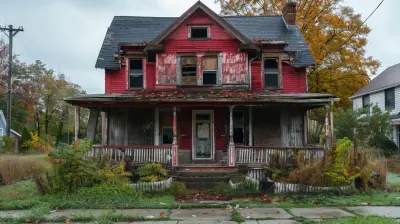
This is why you are seeing explosive growth in places like Erie, Pennsylvania, and Toledo, Ohio. These are not glamorous locations. They have cold winters and old infrastructure. But they also have median home prices under $200,000, which is a concept that sounds like a fairy tale to someone coming from Seattle or Los Angeles. The trade-off is real: you trade the mountains and the ocean for a lake and a lower mortgage payment. For a growing number of families, that is a trade they are willing to make.

The Remote Work Reset: It is Not About the Beach Anymore
The initial remote work boom sent people to beach towns and ski resorts. That was phase one. Phase two, which is dominating 2027, is about stability. People who moved to Boise or Asheville in 2021 are now realizing that those secondary markets have become just as expensive as the primary ones they left. The cost of living in Boise has risen 30 percent faster than the national average since 2020. The secret is out, and the bargains are gone.The new remote work frontier is the "Rust Belt Rebound" corridor. Cities like Youngstown, Ohio, and Flint, Michigan, are seeing an influx of knowledge workers who have realized that a $120,000 salary goes twice as far in a city with a shrinking population than it does in a city with a booming one. The infrastructure is already there: fiber optic internet was laid down for manufacturing plants decades ago, and now it is serving a different kind of workforce.
But there is a critical nuance here. You cannot just work from anywhere and expect to be happy. The remote workers who thrive in these smaller cities are the ones who actively seek out community. They are not moving to Youngstown for the nightlife. They are moving there to buy a $150,000 four-bedroom house and pay it off in a decade. They are starting community gardens, renovating historic homes, and opening coffee shops. They are not passive consumers of a city; they are active participants in its rebirth.
This is the single biggest mistake people make when considering a move to a "surprising" boomtown. They expect the amenities of a major metro without the cost. That expectation leads to disappointment. The cities that are booming in 2027 are not offering a lifestyle that is better than the coasts. They are offering a different lifestyle. One that is slower, more grounded, and ultimately more sustainable. If you need the constant stimulation of a world-class restaurant scene, these cities are not for you. If you want to build equity and actually know your neighbors, they are perfect.

The Climate Migration Factor That No One is Talking About
We hear a lot about climate change and rising sea levels, but the actual migration patterns are more nuanced than people think. It is not just about fleeing Florida or the Gulf Coast. It is about a broader recalibration of where it is safe to live. The 2027 boom is heavily concentrated in a region that experts call the "Great Lakes Golden Belt." This area, stretching from Milwaukee to Buffalo, has a few key advantages: abundant fresh water, moderate summer temperatures, and a geographic position that is less prone to catastrophic wildfires, hurricanes, and extreme drought.This is not just a theory. Look at the data from the last two years. Cities like Duluth, Minnesota, have seen a steady 3 to 4 percent annual population increase, a rate that would have been unthinkable a decade ago. The reason is simple: it is a natural fortress. The climate is cold, but it is predictable. You know it will snow in January. You do not have to worry about your house being swept away by a storm surge in September.
However, there is a misconception that climate migration is only for the wealthy. The truth is that the wealthiest climate refugees are moving to places like Vermont and Maine, which are also getting expensive. The middle class is moving to the industrial Midwest because it represents the last affordable bastion of climate safety. This is a trade-off that involves mental health as much as financial health. The seasonal affective disorder from long, grey winters is a real concern. But for many, the anxiety of watching the news every hurricane season is worse.
The practical advice here is to visit these cities in the dead of winter before you commit. Do not move to Erie, Pennsylvania, in July and think you have found paradise. Go in February. Walk the streets. See how the city handles snow removal. Talk to the locals. If you can handle the grey, you will be rewarded with a quality of life that is increasingly rare. If you cannot, you will be miserable regardless of how much money you save.
The Hidden Gems of 2027: Specific Cities to Watch
Let us get specific. While the macro trends are important, you need actionable names. These are the cities that are not just seeing a blip on the census but are fundamentally restructuring their economies to accommodate new residents.#
1. Toledo, Ohio
Toledo is the poster child for the 2027 boom. It has a bad reputation, mostly from jokes about the "Toledo Mud Hens" and its industrial past. But the reality is that it is undergoing a quiet renaissance. The median home price is still under $160,000. The city has a world-class art museum, a fantastic zoo, and a growing solar panel manufacturing sector. The new residents are not coming for the culture; they are coming for the arbitrage opportunity. They can sell a condo in Denver and buy a historic Victorian in the Old West End neighborhood outright.The mistake people make with Toledo is assuming it is like a smaller version of Chicago. It is not. It is a city that has lost half its population since 1970, which means there is an abundance of space. This is a double-edged sword. You have room to breathe, but you also have blocks of vacant land that make the city feel hollow. The successful newcomers are the ones who see this as an opportunity to build something new, not as a deficiency.
#
2. Erie, Pennsylvania
Erie is another city that is seeing a surprising influx of young families. The draw here is the lake. Presque Isle State Park is a gem that rivals any coastal beach on a summer day. The cost of living is absurdly low. But the real driver of growth is the expansion of the health care sector. Two major hospital systems are competing for talent, and they are recruiting nurses and technicians from high-cost areas by offering salaries that go much further here.The trade-off in Erie is location. It is far from major metropolitan areas. It is a three-hour drive from both Pittsburgh and Buffalo. This isolation is a pro for some and a con for others. If you value weekend trips to big cities, Erie will frustrate you. If you value having a bonfire on the beach after work on a Tuesday, it is unbeatable. The population growth is not explosive, but it is steady and sustainable, which is actually a good sign. It suggests that people are staying, not just passing through.
#
3. Dayton, Ohio
Dayton is the surprise tech hub of the Midwest. It is home to Wright-Patterson Air Force Base, which is one of the largest single-site employers in the country. The base has driven a demand for engineers, data analysts, and cybersecurity experts. The private sector is following suit, with a growing ecosystem of defense contractors and logistics companies.The common mistake here is to assume that because it is a military town, it is culturally barren. That is an outdated view. The Oregon District, the historic downtown area, has a vibrant food and arts scene. The city has invested heavily in bike trails and green spaces. The key difference between Dayton and other growing cities is that the growth is driven by institutional stability, not hype. This means the real estate market is less volatile. You are less likely to see a 20 percent price jump in a year, but you are also less likely to see a crash. For risk-averse buyers, this is a massive advantage.
#
4. Rockford, Illinois
Rockford has been the butt of jokes for years, often cited as a symbol of post-industrial decline. But in 2027, it is having the last laugh. The city is located at the intersection of several major interstates, making it a logistics powerhouse. The explosion of e-commerce has turned Rockford into a distribution hub. This is bringing in warehouse jobs, but more importantly, it is bringing in logistics management jobs that are higher paying.The challenge with Rockford is that the recovery is uneven. Some neighborhoods are thriving, while others still look like a ghost town. You have to be very careful about which block you buy on. A street can go from charming to blighted in just a few blocks. The advantage is that you can still find homes for under $100,000 that are move-in ready. But this is not a market for passive investors. It is a market for owner-occupants who are willing to put in the work to stabilize a neighborhood. If you are looking for a turnkey investment property, look elsewhere. If you want a home where you can be a pioneer, this is it.
The Role of State-Level Policies
You cannot talk about these population booms without discussing state-level politics. The states that are winning in 2027 are not necessarily the ones with the lowest taxes. They are the ones with the most predictable governance. Ohio, for example, has a flat income tax that is being phased down. Pennsylvania has a flat tax as well. These states are not trying to be the next Texas or Florida. They are trying to be the "safe harbor" for people who are tired of the policy whiplash in places like California or New York.The misconception is that people only care about taxes. They do not. They care about value. A high tax state is fine if you get great services. A low tax state is awful if you have to send your kids to underfunded schools. The states experiencing the 2027 boom are the ones that are creating a stable business environment without gutting public services. This is a delicate balance. Ohio has a massive budget surplus right now, which they are using to fix roads and fund education. That is a more powerful draw than a tax cut.
If you are considering a move, look at the state budget, not just the tax rate. Is the state investing in infrastructure? Is it expanding Medicaid? Is it funding public schools? These are the long-term indicators of a healthy place to live. A low tax rate that results in crumbling roads and poor schools is not a bargain; it is a trap.
Practical Advice for the 2027 Mover
So, you have read this far and you are intrigued. You are a remote worker or a nurse or a logistics manager, and you are wondering if one of these cities is right for you. Here is the actionable advice you need.First, do not buy a house before you rent. This is the golden rule of moving to a surprising boomtown. The rental market in these cities is thin, so you might have to settle for a short-term lease or an Airbnb for a few months. But that is a small price to pay for the certainty of knowing you actually like the place. Too many people moved to Boise during the pandemic, bought a house sight unseen, and left within two years. Do not repeat that mistake. Rent for at least six months. Learn the neighborhoods. Find out where the flooding happens and where the crime is concentrated. Then buy.
Second, understand that your dollar goes further, but your earning potential may not. If you are keeping a remote job with a coastal salary, you are in a golden position. But if you are taking a local job, the salary will likely be lower. You need to do the math on the total compensation package, not just the hourly rate. A $60,000 job in Erie might be the equivalent of an $85,000 job in Denver when you factor in housing, childcare, and transportation. But you have to be sure that the job market is stable. The health care and government sectors are the anchors in these cities. The private sector is growing, but it is not as deep as the coasts. If you lose your job, you have fewer options.
Third, be prepared for a different pace of life. This sounds like a cliche, but it is the biggest reason people leave. The restaurants close earlier. The nightlife is less intense. The social scene revolves around community events, churches, and outdoor activities, not trendy clubs. If you are an introvert, this is heaven. If you are an extrovert who needs constant social stimulation, you will struggle. The best way to combat this is to become a joiner. Join the local Rotary Club. Volunteer at the food bank. Take a class at the community college. You will get out of the community exactly what you put into it, and if you put in nothing, you will be miserable.
Finally, look at the long-term trajectory, not just the current price. These cities are booming because they are cheap now. But that will not last forever. As more people move in, prices will rise. If you buy now, you are getting in on the ground floor. But you also need to consider the exit strategy. Is there a diverse economy to support future job growth? Is the population aging or are young people staying? A city like Erie has a net outflow of young people, which is a concern. A city like Dayton is retaining more of its college graduates because of the tech sector. You want to buy in a place where there is a future, not just a cheap house.
The Misconception of "Fleeing" the Coasts
It is tempting to frame this as a story of people fleeing liberal coastal elites for conservative heartland values. That is a false narrative. The migration is not politically driven. It is economically driven. You have plenty of progressive voters moving to Toledo because they cannot afford to live in Portland anymore. You have plenty of conservative voters moving to Dayton for the defense jobs. The common thread is not politics; it is the desire for a stable, affordable life.This means that the political character of these cities is changing rapidly. They are becoming more purple. This is actually a good thing for the residents, as it forces local governments to be more responsive and less ideologically extreme. But it also means that if you are moving to one of these cities expecting a monolithic political echo chamber, you will be disappointed. You will have neighbors with different views, and you will have to learn to get along. This is a feature, not a bug.
A Final Word on the 2027 Landscape
The population boom of 2027 is a correction. It is the market finally waking up to the fact that the value of a city is not determined by its skyline, but by its balance sheet. The cities that are winning are the ones that offer a path to wealth creation for the average person, not just the top 10 percent. They are not glamorous, but they are real. They are not perfect, but they are improving.If you are tired of the rat race and you are willing to trade a little convenience for a lot of financial freedom, one of these surprising boomtowns might be exactly where you need to be. The key is to go in with your eyes open, your expectations grounded, and your willingness to put down roots firmly in place. The boom is real, but it is not for everyone. It is for those who are ready to redefine what success looks like. And in 2027, that definition is looking a lot more like a paid-off mortgage and a front porch in a place you can actually afford to live.
all images in this post were generated using AI tools
Category:
Real Estate NewsAuthor:

Kingston Estes
Discussion
rate this article
2 comments
Maris Rhodes
Exciting trends for real estate in 2027!
September 11, 2026 at 10:39 AM
Kingston Estes
I'm glad you found it exciting! The growth in these cities is definitely something to watch.
Olivia Shaffer
It's fascinating to see which cities are attracting new residents. Growth trends can reveal where opportunities are emerging, but it's essential to investigate the local factors contributing to this boom. Understanding the reasons behind the influx can help potential buyers make informed decisions.
September 5, 2026 at 3:17 AM
Kingston Estes
Absolutely, understanding local factors is key to grasping these trends. It's all about the opportunities and lifestyle that draw people in.