The Rise of Secondary Cities: Investment Hotspots for 2027
1 October 2026
For most of the last two decades, real estate capital flowed into a predictable set of destinations. Gateway metros like New York, London, Sydney, Toronto, and Singapore absorbed the lion's share of institutional money because they offered liquidity, transparency, and deep tenant demand. That pattern is changing. A combination of affordability pressure, remote work, infrastructure spending, and corporate relocation is pushing serious investors toward secondary cities, and the smart money is positioning now for a 2027 horizon.
This article is not a list of trendy towns. It is an analytical framework for understanding why secondary cities are becoming core holdings, where the genuine opportunities sit, and how to separate durable growth markets from short-lived hype.
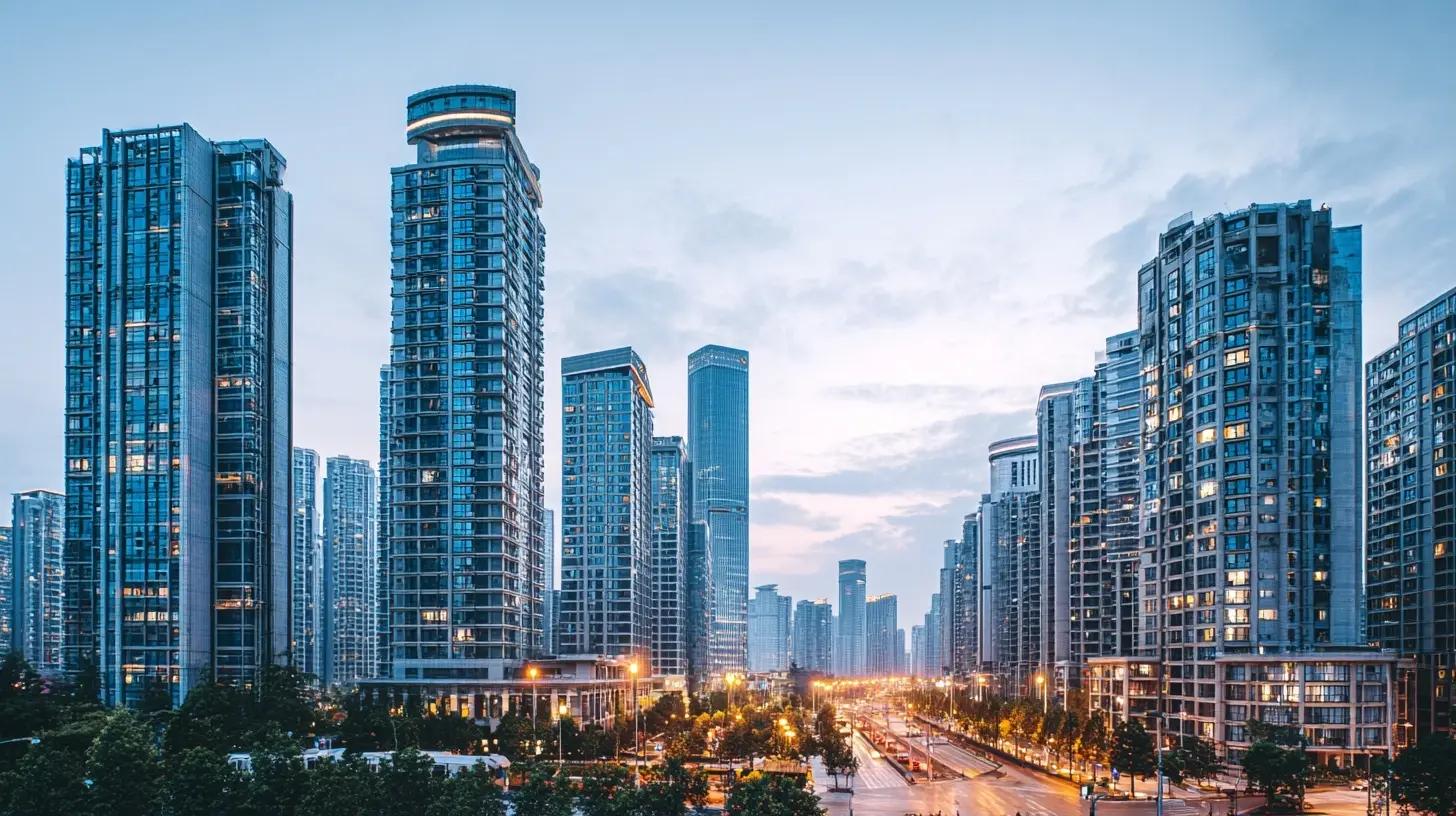
What Actually Counts as a Secondary City
The term gets used loosely, so it helps to define it precisely. A secondary city is a metropolitan area that functions as a regional economic hub but sits below the top tier of national or global gateways. It typically has a population between roughly 200,000 and 2 million, a diversified employment base, an airport or major rail connection, at least one or two universities, and a functioning commercial core.The distinction matters because investors often confuse three different things:
- Secondary cities with real economic depth, such as Austin, Raleigh, Rotterdam, or Brisbane's outer ring.
- Tertiary or satellite towns that depend on a single employer or a single industry.
- Commuter exurbs that have no independent economy and rise or fall with the nearest gateway.
Only the first category deserves consideration as a strategic allocation. The second and third can produce spectacular short-term returns and equally spectacular reversals.

Why the Shift Is Happening Now
Several forces are converging, and their combined effect is what makes the 2027 window distinctive.The affordability ceiling in gateway markets
In most developed economies, price-to-income ratios in primary cities have stretched far beyond historical norms. When housing costs consume 40 to 50 percent of median income, the city begins to lose the workers it needs to function. Nurses, teachers, tradespeople, and junior professionals get pushed out. That erodes the labor pool that underpins office demand, retail spending, and municipal services. Secondary cities absorb that displaced demand.Remote and hybrid work as a permanent feature
Hybrid work did not kill the office. It redistributed it. Companies now lease smaller footprints in expensive cities and open satellite offices or back-office hubs in cheaper ones. This creates two distinct investment plays: residential demand in the receiving city and repriced commercial assets in the sending city. Both are legitimate, but they require completely different underwriting.Infrastructure spending with long tails
Governments across North America, Europe, and parts of Asia have committed heavily to rail, ports, broadband, and energy transition projects. These investments take years to complete, which means their economic impact lands well after the announcement. An investor buying in 2025 or 2026 is effectively buying the pre-completion phase of projects that will mature around 2027 and beyond. That timing gap is where value is created.Corporate relocation and "hub-and-spoke" networks
Large employers increasingly run hub-and-spoke models: a flagship office in a gateway city, supported by regional hubs in secondary markets. Each hub brings high-wage jobs, which in turn support housing, retail, and services. When a Fortune 500 company commits to a secondary city, it usually does so with a multi-year lease and a hiring plan, giving investors a degree of demand visibility that speculative markets rarely offer.
The Investment Case, Honestly Assessed
Secondary cities are not automatically better than primary ones. They offer a different risk-return profile, and understanding the trade-offs is essential.Advantages:
- Higher initial yields, often 150 to 300 basis points above comparable gateway assets.
- Lower entry prices, which allow diversification across more markets with the same capital.
- Less institutional competition, which means better access to off-market deals and value-add opportunities.
- Stronger demographic tailwinds in cities with inbound migration.
Disadvantages:
- Thinner transaction markets, which can slow exits during downturns.
- Greater dependence on a small number of employers or industries.
- Less reliable data, making underwriting harder and more expensive.
- Political and regulatory risk that varies sharply from one city to the next.
The honest conclusion is that secondary cities reward research and punish laziness. In a gateway market, you can often get away with a broad thesis. In a secondary market, you need to know the submarket, the employer base, and the supply pipeline street by street.
The Criteria That Separate Winners From Losers
Not every secondary city will outperform. The ones that do tend to share a specific set of characteristics. Investors should screen for these explicitly.Economic diversity
A city with three or four major employment sectors is far more resilient than one dominated by a single industry. Look at the concentration of employment by sector. If one sector accounts for more than 25 percent of jobs, treat the market as cyclical and price it accordingly.Education and talent pipeline
Universities do more than educate. They anchor research funding, spin out startups, and retain a portion of graduates. Cities that keep 40 percent or more of their graduates have a structural advantage over those that export them.Infrastructure capacity
Housing supply, water, power, transit, and road networks all constrain growth. A city that cannot build quickly will see prices spike, which sounds good until it triggers political backlash and rent controls. A city that can build will see more moderate but more sustainable appreciation.Governance quality
This is the most underrated factor. Permitting timelines, property tax regimes, rent regulation, and landlord-tenant law vary enormously. A market with a hostile regulatory trajectory can wipe out a decade of appreciation. Read the local housing strategy and the last two budget cycles before you commit capital.Liquidity and depth
Even if you plan to hold for ten years, you need to know who will buy the asset from you. Markets with active local developers, regional REITs, and private syndicators have exit options. Markets where the only buyer is another out-of-state investor are fragile.Regional Snapshots and What They Teach
Rather than naming specific hotspots, which would be irresponsible given how quickly conditions change, here is how to read the major regions.North America
The strongest secondary markets tend to be in the Sun Belt and the Mountain West, driven by in-migration, lower taxes, and business-friendly regulation. The risk in these markets is oversupply. Many have seen explosive permitting activity, and some submarkets will be oversupplied by 2027. The winners will be cities that pair job growth with disciplined supply.The Midwest and Northeast offer a different proposition: slower growth, but cheaper basis and often stronger in-place cash flow. These are income plays, not appreciation plays, and they should be underwritten as such.
Europe
European secondary cities are shaped heavily by rail connectivity. A city within 90 minutes of a major capital by high-speed rail can function as both a commuter market and an independent economy. Cities in this category have shown durable demand from both households and logistics operators. The main risks are regulatory, particularly around rent controls and energy efficiency standards, which can force significant capital expenditure on older stock.Asia-Pacific
Secondary cities in this region vary enormously. Some are manufacturing hubs tied to global supply chains, which makes them sensitive to trade policy. Others are tourism-dependent, which makes them sensitive to travel cycles. The most attractive markets tend to be those with a growing domestic consumer base and improving infrastructure, because they have internal demand drivers that do not depend on external capital.
Asset Classes: Where the Opportunity Sits
Different property types behave very differently in secondary markets.Multifamily and build-to-rent. This is the most straightforward play. Demand is driven by employment and household formation, both of which are easier to forecast than retail spending or office utilization. The main risk is supply, so pay close attention to the pipeline.
Industrial and logistics. Secondary cities with good highway access and available land have benefited enormously from e-commerce. The risk here is that cap rates have compressed significantly, and some markets are now priced for perfection. Focus on infill locations with last-mile characteristics rather than greenfield sites far from population centers.
Office. This is the most difficult sector. Secondary market offices can work if they are Class A, well-located, and leased to credit tenants on long terms. Everything else is a value-add or opportunistic play at best. Do not assume that a secondary market office is safer than a gateway office; in many cases the opposite is true.
Retail and mixed-use. Neighborhood retail anchored by grocery or medical tenants remains resilient. Large-format retail and malls continue to struggle. Mixed-use projects can work well in walkable secondary downtowns, but they require strong local sponsorship and realistic absorption assumptions.
Common Mistakes Investors Make
These errors show up repeatedly, and they are expensive.Confusing population growth with investment merit. A city can grow quickly and still be a poor investment if supply outpaces demand or if the growth is concentrated in low-income households.
Underestimating exit risk. Buying is easy. Selling in a thin market can take 12 to 18 months and require a discount. Build that into your return model.
Ignoring local politics. A single ordinance on short-term rentals, rent increases, or property taxation can change the economics of an entire portfolio.
Extrapolating from a single data point. One large employer announcement or one major infrastructure project is not a thesis. It is a hypothesis that needs to be tested against supply, demand, and timing.
Overpaying for the story. Secondary markets often get priced on narrative rather than cash flow. When the narrative fades, the cap rate expands. Buy on numbers, not on press releases.
A Practical Framework for 2027 Positioning
If you are allocating capital now for a 2027 horizon, here is a sequence that works.1. Define your mandate. Income, appreciation, or a blend. This determines which markets and asset classes are even eligible.
2. Screen on fundamentals. Employment diversity, wage growth, population trends, and supply pipeline. Use consistent data across markets.
3. Stress test the downside. Model a 20 percent rent decline and a 150 basis point cap rate expansion. If the deal still services debt, it is robust.
4. Check the exit. Identify at least three plausible buyer types and confirm they are active in the market.
5. Visit the market. Data does not capture traffic patterns, construction quality, or the mood of local businesses. Two days on the ground will tell you more than two weeks of spreadsheets.
6. Build local relationships. A good local partner or property manager is worth more in a secondary market than in a gateway, because information is less transparent.
7. Stage your capital. Do not deploy everything at once. Secondary markets can shift quickly, and optionality has value.
What Could Go Wrong
The bull case for secondary cities is credible, but it is not guaranteed. Three risks deserve particular attention.First, a prolonged period of high interest rates would hit secondary markets harder than gateways, because their buyers are more reliant on debt and their yields are more sensitive to financing costs.
Second, a reversal in remote work policies could pull demand back toward gateway cities, though the evidence so far suggests this is a partial and uneven trend rather than a full reversal.
Third, local oversupply is a real and present danger in several fast-growing markets. The cities that manage their pipelines well will outperform those that do not, and the difference will be visible by 2027.
The Bottom Line
The rise of secondary cities is not a fad. It reflects structural changes in where people work, what they can afford, and how capital allocates across geographies. For investors willing to do the work, these markets offer better yields, less competition, and genuine diversification. For those who treat them as a shortcut to gateway-style returns, they offer a lesson in why local knowledge still matters.The opportunity in 2027 will not go to the investors who chase the loudest narrative. It will go to those who build a disciplined process, understand the specific economics of each market, and stay patient while others overpay for the story.
all images in this post were generated using AI tools
Category:
Real Estate InvestmentAuthor:

Kingston Estes