The Impact of Remote Work on Housing Demand in 2027
3 September 2026
Five years ago, the debate was whether remote work would stick. By 2024, the argument was about return-to-office mandates. But in 2027, we have moved past the binary of "home" versus "office." We are now living in a hybrid reality where the question is not if people work remotely, but where they choose to anchor their lives when the office is just one option among many. The housing market has fully absorbed this shift, and the resulting demand patterns look nothing like the pre-pandemic models.
This is not a story about a temporary spike in suburban home sales. It is a structural reallocation of housing value across metros, neighborhoods, and even building types. To understand where demand is heading, you have to stop thinking about commute times in minutes and start thinking about them in terms of lifestyle trade-offs, digital infrastructure, and the geography of opportunity. Let's break down what is actually happening in 2027, what it means for buyers, sellers, and investors, and where the real opportunities and pitfalls lie.
The End of the Monocentric Commute Model
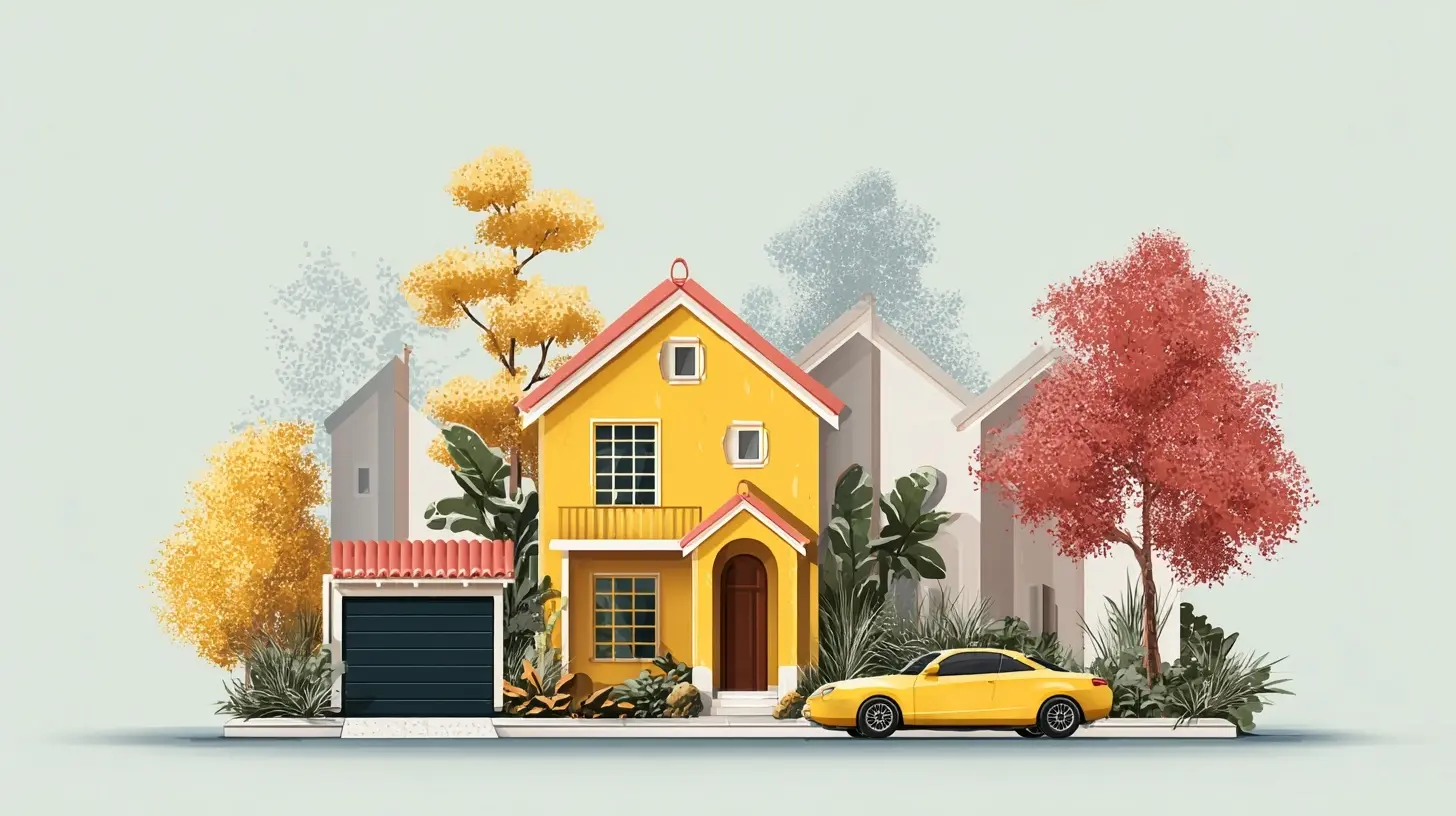
For over a century, housing demand was a direct function of proximity to a single employment center. The classic bid-rent theory dictated that land prices peaked at the central business district and declined with distance. Remote work did not just bend this curve; it fractured it.In 2027, the dominant employment pattern is not "work from home" full-time. It is "work from anywhere, but meet in person sometimes." This has created a new geography where the most desirable housing is not necessarily close to downtown, nor is it in the furthest exurbs. It sits in what urban planners now call the "middle ring" - areas that offer a reasonable drive or train ride to a major city for weekly meetings, but which also possess their own local employment clusters, quality schools, and lifestyle amenities.
Consider the San Francisco Bay Area. In 2019, a home in Livermore or Brentwood was a compromise for those who could not afford the Peninsula. By 2027, these cities have become primary targets for tech workers who go into the office two days a week. They have traded a 90-minute daily commute for a 90-minute commute twice a week. The trade-off is no longer about time saved daily, but about space gained permanently. The demand curve has flattened, and it now has multiple local peaks around satellite office hubs and co-working spaces, not just one central downtown spike.
For homebuyers, this means the old advice of "buy the worst house on the best street" needs a serious update. The "best street" in 2027 might be the one with fiber-to-the-home, a dedicated home office with separate HVAC, and a 15-minute bike ride to a commuter rail station that runs express service three times in the morning. The street's proximity to a downtown is less important than its proximity to a reliable high-speed transport node that connects to a downtown.

The Rise of the "Zoom Town" 2.0
The initial "Zoom towns" of 2020 and 2021 were largely opportunistic. People fled to Lake Tahoe, Austin, or Boise for space and lower taxes, often without a deep connection to the community. That wave has crested. In 2027, we are seeing a more deliberate migration pattern, driven by what I call "infrastructure arbitrage."This is not about finding the cheapest place to live. It is about finding places where the cost of living is moderate, but the digital and physical infrastructure allows for a senior-level salary to be earned without being physically present in a high-cost metro. The winners in 2027 are not the cheapest states, but the ones that invested heavily in broadband, renewable energy grids, and local amenities that appeal to knowledge workers.
Take the case of Northwest Arkansas. It is not a glamorous destination. But by 2027, it has become a genuine hub for remote workers in logistics and supply chain management, not because of its scenery, but because the local corporate base (think Walmart and Tyson) has created a dense ecosystem of suppliers who hire remotely. A data analyst in Fayetteville can work for a firm in Chicago, but they can also switch jobs to a local startup without moving. That job-switching liquidity is the new currency of housing demand.
The common mistake here is assuming that remote workers want rural living. They do not. They want small urban or large suburban environments with a distinct identity. They want a place where their partner can also find work, where their kids can walk to school, and where a third place (a coffee shop, a library, a community center) exists that is neither home nor office. In 2027, the hottest housing markets are in secondary cities with populations between 250,000 and 1 million that have a downtown with actual character, not just a strip mall.
The Disappearing Premium on Home Offices
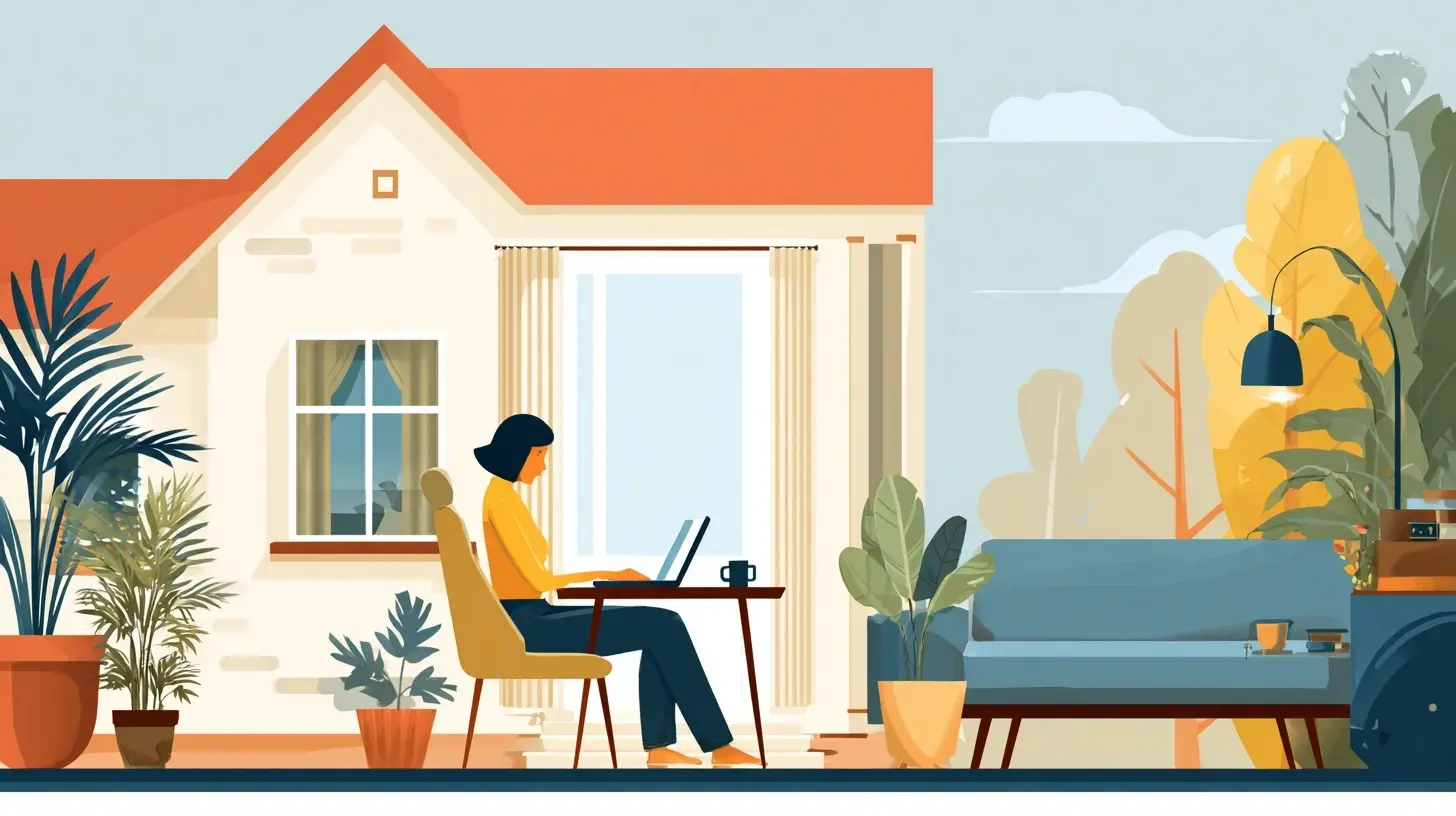
In 2020, a "home office" was often a converted dining room or a desk in the corner of the bedroom. By 2027, that is not acceptable for a significant portion of the buying public. The home office has become a non-negotiable third or fourth bedroom, and it has specific requirements that are reshaping floor plans.The demand is no longer for "a room with a door." It is for a room with acoustic insulation, a dedicated circuit for electronics, and a sightline that does not face a busy street. More importantly, the office needs to be separate from the "living" zones to allow for psychological separation between work and rest. This has driven a wedge in the market between homes built before 2015 and those built after.
Older homes, even large ones, often have a formal living room that nobody uses. In 2027, buyers are converting these into offices, but the layouts are awkward. The best-performing assets are homes with a "flex room" on the ground floor, near a half-bath, with its own exterior entrance. This allows for a professional client visit without the client walking through the family's messy kitchen.
This trend has also killed the open floor plan. The massive great room with a kitchen island and a sightline to the TV is now seen as a distraction. Builders in 2027 are constructing "quiet zones" - a wing of the house dedicated to work and study, with solid core doors and acoustic ceiling panels. If you are looking at a resale home, check if the primary bedroom is on the opposite side of the house from the potential office. If they share a wall, expect to budget for soundproofing, which is an expensive renovation that most sellers have not done.

The Secondary Effect on Rental Markets
The impact on rental housing is more nuanced than on for-sale housing. The luxury apartment market in downtown cores has softened in many cities, not because people do not want to live there, but because the premium for being "close to the action" has dropped. Why pay $4,000 for a one-bedroom downtown when you only need to be there three days a week? Instead, renters are looking for larger units in the inner suburbs, often with a den or a home office alcove.However, there is a counter-trend. The "third place" rental is on the rise. These are not apartments in the traditional sense. They are hybrid living-working spaces, often operated by hospitality brands, offering a private bedroom, a shared high-end kitchen, and a professional-grade co-working lounge on the ground floor. These appeal to a specific demographic: the young, single contractor who works on project-based timelines and does not want to sign a 12-month lease. They are paying a premium for flexibility, but this is a small slice of the market, not the mainstream.
For landlords, the biggest mistake in 2027 is assuming that a "home office" means just a desk. Renters are now checking for two things before signing a lease: internet speed and cellular signal strength. A building that only offers basic cable internet is struggling to fill units, even if the rent is 10% below market. Buildings that offer symmetrical gigabit fiber and have a dedicated co-working floor are achieving premium rents with vacancy rates below 2%. This is not a niche preference; it is a utility requirement, as essential as water and heat.
The Shift in Secondary and Vacation Markets
There has been a profound change in what we used to call "vacation homes." In 2027, these are increasingly "workation homes." Buyers are not looking for a place to escape work; they are looking for a place to do work in a different environment for a month at a time.This is driving demand in specific geographies: mountain towns with reliable high-speed internet and coastal communities with a robust local service economy. The key differentiator is not the view, but the redundancy of infrastructure. A buyer in 2027 will often pay more for a home in a town that has two separate fiber providers or a municipal broadband utility than for a home with a better view but only satellite internet.
This has created a unique problem for places like the Hamptons or the Jersey Shore. These areas have high demand, but they also have summer crowds that make working from home difficult. The 2027 buyer is looking for shoulder-season destinations - places that are vibrant in May and October, not just July. This has boosted markets like the Outer Banks in North Carolina, which has invested heavily in fiber, and the Olympic Peninsula in Washington state, which offers a quieter lifestyle than the more famous Seattle suburbs.
Interest Rates and the "Locked-In" Effect
We cannot discuss housing demand in 2027 without acknowledging the mortgage rate environment. Many homeowners who secured 3% mortgages in 2020 and 2021 are sitting on historically low rates. They are "locked in." They cannot move without doubling their monthly payment, which has suppressed the supply of existing homes for sale.However, remote work is changing the calculus for this group. Instead of selling, many are choosing to renovate or add an accessory dwelling unit (ADU). This is a rational response to the lock-in effect. Why sell a 3% mortgage and buy a 7% mortgage when you can build a separate income suite in the backyard and rent it out to a remote worker who wants your neighborhood's amenities but cannot afford a single-family home?
This has created a surge in demand for properties with large lots or existing structures that can be converted. A home with a detached garage is now significantly more valuable than a similar home with an attached garage, because the detached garage can be converted into a studio. This is a niche but growing segment of the market, and it is a smart play for investors who are willing to navigate local zoning laws. The mistake here is assuming that all municipalities allow ADUs. Some do, and some do not. The value is only realized if the local government permits it.
The Overlooked Importance of Local Amenities
A common misconception is that remote workers only care about the inside of their home. In reality, they care deeply about the immediate neighborhood, because they spend more time there than any previous generation of workers.Since they are not commuting daily, they are walking to the local grocery store, the pharmacy, and the park during off-peak hours. This has increased the value of "15-minute neighborhoods" - areas where daily needs are met within a short walk or bike ride. In 2027, a home in a walkable suburb with a decent local coffee shop is outperforming a home in a car-dependent exurb that is 20% larger.
This is why master-planned communities have seen a renaissance, but only the ones that were designed with mixed-use principles. The old-style subdivisions with winding cul-de-sacs and no commercial center are struggling to attract buyers, even with lower prices. The new style, with a central "main street" that includes a small grocery, a gym, and a medical clinic, is achieving premium prices. This is not just about convenience; it is about reducing the friction of daily life for people who are home more often.
Practical Advice for Buyers in 2027
If you are looking to buy in this market, stop fixating on the price per square foot. Instead, focus on the cost per usable hour.1. Check the Internet Infrastructure, Not Just the Speed Test. A speed test on a phone is meaningless. Ask for the provider and the plan. If the home only has cable with a 35 Mbps upload speed, you will struggle with video calls and large file transfers. Look for fiber. If it is not available, check if the local utility is planning to run it. This is a deal-breaker in 2027.
2. Evaluate the Floor Plan for Acoustics. The best home office is on a separate floor from the primary living area. If you have clients on video calls, you need to be away from the kitchen and the kids' playroom. Look for a room with a solid door and minimal shared walls with noisy spaces.
3. Consider the "Third Place" Proximity. How far is the nearest public library, coffee shop with reliable Wi-Fi, or co-working space? This is your backup plan when your home internet goes down or you need to get out of the house. Homes within a 10-minute walk of a reliable third place are more resilient to changes in work patterns.
4. Look for Redundant Power. A home with a generator or solar panels with battery storage is not just a luxury. For a remote worker, a power outage means a lost day of work. This is now a functional requirement, not a status symbol.
The Investor's Dilemma
For real estate investors, the 2027 market presents a clear trade-off: buy for cash flow in secondary markets or buy for appreciation in primary markets that have not yet fully adjusted.The secondary markets (places like Boise, Spokane, or Huntsville) have already seen a massive run-up in prices. The arbitrage opportunity is largely gone. Buying there now for cash flow is risky, as rents may not keep pace with property taxes and insurance costs, which have risen sharply in wildfire and flood-prone areas.
The smarter play in 2027 is to look for "transitional" suburbs around major metros that are still primarily commuter-oriented but are starting to attract local employers. These are towns that have a downtown with empty retail space that is being converted to office or co-working. The housing stock is older, but the demand is growing as more companies allow full-time remote work and these towns become more attractive than the core city.
The common mistake for investors is to buy a single-family home in a low-cost area without checking the local employment base. If the town's primary employer is a hospital or a university, it is more stable than a town dependent on one manufacturing plant. Remote work has made the economy more footloose, which means local economic diversity is more important than ever. A town with a mix of healthcare, education, and light technology is a safer bet than a town with a single big-box warehouse.
The Downside of Flexibility
We must also address the negative aspects. The shift to remote work has not been uniformly positive. It has led to a bifurcation of opportunity. High-income knowledge workers have gained massive flexibility and purchasing power. Lower-income service workers, who cannot work remotely, have been pushed further out of desirable neighborhoods as remote workers gentrify them.In 2027, we are seeing a backlash against this in the form of local zoning reforms. Some towns are restricting short-term rentals to preserve housing stock for long-term residents. Others are imposing "remote worker taxes" or requiring proof of local employment to purchase a home. These are extreme measures, but they reflect a real tension. As a buyer, you need to be aware of the local political climate. A town that is hostile to newcomers will have more friction in the buying process and may not be a good long-term investment, regardless of the home's quality.
The Verdict for 2027
The impact of remote work on housing demand in 2027 is not a single trend. It is a permanent restructuring of how we value space. The home is no longer just a consumption asset; it is a productive asset - a place of business. The homes that are appreciating fastest are not the largest or the most luxurious. They are the most functional for a work-from-home lifestyle.The days of the 45-minute commute are not over, but they are now a choice, not a requirement. The housing market is now a market of options. The winners are those who understand that a home's value is tied to its ability to support a life that is not centered on a daily office pilgrimage. The losers are those who cling to outdated models of what a "good location" means.
Before you make an offer, ask yourself one question: Can I live a full, productive, and happy life in this house if I never have to go to a corporate office again? If the answer is yes, you are looking at a future-proof asset. If the answer is no, you are buying a relic of a bygone era, and no amount of square footage will compensate for that.
all images in this post were generated using AI tools
Category:
Real Estate MarketAuthor:

Kingston Estes
Discussion
rate this article
2 comments
Katie Williams
Interesting insights on how remote work is reshaping housing demand. Looking forward to 2027!
September 29, 2026 at 3:17 AM
Gisela Cooper
Great insights! The shift to remote work is reshaping housing trends in ways we never expected. I'm curious to see how this affects urban and suburban markets by 2027. It's a fascinating time to be looking at real estate with all these changes ahead!
September 19, 2026 at 2:58 AM
Kingston Estes
Thanks for your thoughts! It will be interesting to see how these trends evolve. The urban-suburban dynamic is definitely worth watching.