Preparing for the 2027 Hurricane Season: An Insurance Checklist
29 September 2026
Most homeowners treat hurricane insurance like a fire extinguisher. It hangs on the wall, it costs money, and you assume it will work when you need it. Then a storm strips the shingles off your roof, and you find out your policy pays for a fraction of the replacement cost, your deductible is higher than you remembered, and the check arrives three months after the contractor already started work.
The 2027 season deserves more respect than that. Forecasters at Colorado State University and the National Oceanic and Atmospheric Administration have pointed to a multi-decade pattern of elevated Atlantic hurricane activity that began around 1995. That pattern does not guarantee a bad year. It does mean the baseline risk is higher than it was when many of us bought our first home. Add in an insurance market that has been repricing coastal risk aggressively since 2022, and you get a situation where the smartest move is not buying more coverage blindly. It is understanding exactly what you own, what it pays, and where the gaps sit.
This checklist walks through that process step by step. It is written for homeowners, condo owners, landlords, and anyone with a mortgage on a property within reach of an Atlantic or Gulf storm. Work through it between January and May. By June 1, when the season officially opens, you want to be done.
Start With Your Declaration Page, Not Your Agent
The declaration page is the two or three page summary at the front of your policy. It lists your coverage limits, deductibles, and endorsements. Read it before you call anyone. Agents are busy in spring, and you will ask better questions if you already know the numbers.Look for four things.
First, Coverage A, which is your dwelling limit. This is the maximum the insurer will pay to rebuild the structure. Second, your hurricane deductible, which is almost always expressed as a percentage of the dwelling limit rather than a flat dollar amount. Third, your wind and hail deductible, which may be separate. Fourth, any endorsements or exclusions listed by name.
A common shock: a homeowner with a $500,000 dwelling limit and a 5 percent hurricane deductible faces a $25,000 out-of-pocket cost before the insurer pays a dollar. If that same homeowner assumed the deductible was the $2,500 figure from a previous policy, the shortfall is $22,500. That is not a rounding error. It is a new roof.
Why Percentage Deductibles Exist
Insurers introduced percentage deductibles in coastal states during the 1990s after several catastrophic seasons. The logic is straightforward. A flat deductible on a $200,000 house and a $2 million house means the insurer absorbs wildly different risk for the same premium. A percentage deductible scales the homeowner's share with the value of the property.The trade-off is real. Percentage deductibles keep premiums lower than they would be with flat deductibles, but they shift a large chunk of risk onto you. If you live in a modest home and your deductible is 2 percent, the math is manageable. If you live in a high-value coastal home and your deductible is 5 percent, you are self-insuring a significant amount. Know which category you fall into before the storm forms.
Rebuild Cost Versus Market Value
This is the single most misunderstood concept in property insurance, and it causes more claim disputes than almost anything else.Your dwelling coverage limit should reflect the cost to rebuild your home from the ground up at current labor and material prices. It should not reflect what your home would sell for, what you paid for it, or what the county assessor says it is worth. Those numbers can differ by hundreds of thousands of dollars in either direction.
In a hot market, market value often exceeds rebuild cost. In a depressed market, it can fall below. Neither number tells the insurer what it costs to pour a foundation, frame a house, install a roof, and finish the interior in your specific area.
How to Check Your Limit
Ask your agent for the replacement cost estimator worksheet behind your dwelling limit. Most insurers use software like Marshall and Swift or a proprietary equivalent. The worksheet breaks down square footage, construction type, roof material, foundation, and local labor rates.Then do a reality check. Call two or three local builders and ask what they currently charge per square foot for the kind of house you own. In many coastal markets, that figure has climbed faster than the consumer price index because of labor shortages, code changes, and material costs. If your policy assumes $180 per square foot and builders are quoting $260, you are underinsured by roughly 30 percent.
Some policies include an extended replacement cost endorsement that pays 125 or 150 percent of the dwelling limit if costs spike after a widespread disaster. This endorsement is worth its premium in a hurricane zone. After a major storm, demand for contractors surges, and prices follow. Without extended replacement cost, you eat the difference.
Flood Is Almost Never Included
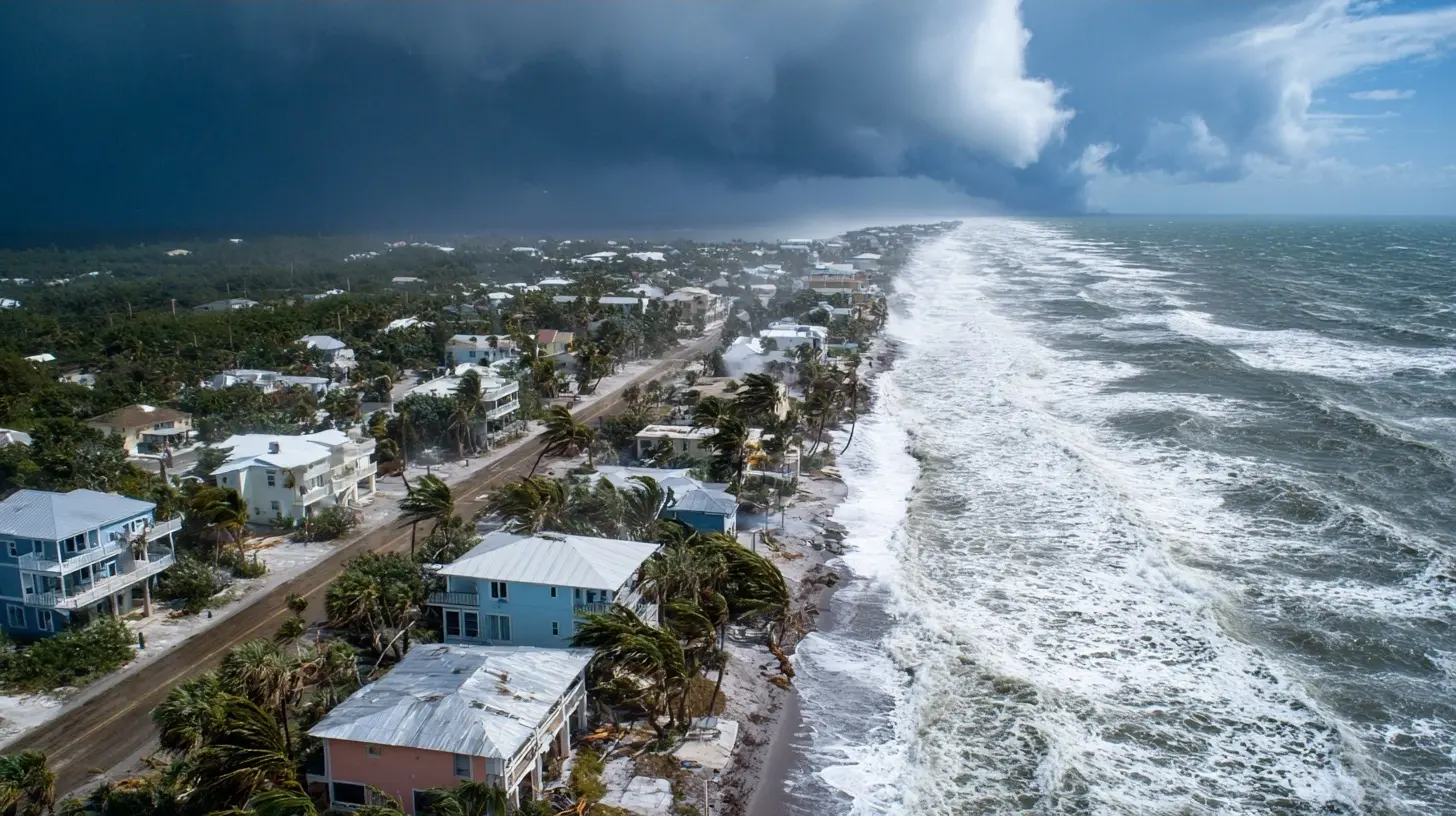
Here is the misconception that sinks more homeowners than any other. Wind damage from a hurricane is typically covered by your homeowners policy. Flood damage is not. Not from storm surge, not from rising water, not from rain that pools against your foundation and seeps in.A standard homeowners policy excludes flood. Full stop. You need a separate flood policy, most commonly through the National Flood Insurance Program, or a private flood carrier if one operates in your state.
The 30-Day Waiting Period
NFIP policies generally take effect 30 days after purchase. That means a policy bought on August 15 will not cover a storm that makes landfall on September 1. This rule exists to prevent people from buying coverage as a storm approaches. Plan accordingly. Buy flood coverage in the spring, not when a system is spinning in the Atlantic.Do You Need It If You Are Not in a Flood Zone?
Many homeowners outside designated high-risk zones skip flood insurance because their lender does not require it. That is a gamble. Roughly a quarter of NFIP claims historically come from properties outside high-risk zones, according to program data. Low-lying terrain, poor drainage, and heavy rainfall can flood a home that has never flooded before.If you are outside a high-risk zone, a preferred risk policy through the NFIP is often inexpensive relative to the coverage it provides. Run the numbers. For many homeowners, the annual premium is less than a single night in a hotel.
Wind Mitigation: The Discount Most People Leave on the Table
Several coastal states, including Florida, require insurers to offer discounts for homes built or retrofitted to resist wind. These discounts can be substantial, sometimes 15 to 45 percent off the wind portion of your premium, depending on the features of your home and the insurer.Qualifying features typically include a hip roof rather than a gable roof, a secondary water barrier under the roof covering, roof-to-wall attachments using straps or clips, impact-resistant glass or approved shutters, and a reinforced garage door.
How to Capture the Discount
Hire a licensed inspector to complete a wind mitigation inspection. The report follows a standardized form in states that mandate the discounts. Submit it to your insurer. Many homeowners never do this because they do not know it exists, and their agent never mentions it.The inspection usually costs a few hundred dollars. If it shaves $800 off your annual premium, it pays for itself in the first year and keeps paying after that. Even if you do not qualify for the maximum discount, partial credits add up.
One caveat: not every insurer applies the discounts identically. Some cap the total credit. Some require the inspection within a certain window. Ask your agent how your specific carrier handles the form before you schedule the inspection.
Actual Cash Value Versus Replacement Cost
Two policies with identical limits can pay wildly different amounts after a loss. The difference comes down to how the insurer values your damaged property.Actual cash value, or ACV, pays replacement cost minus depreciation. A ten-year-old roof with a twenty-year life expectancy might be valued at 50 percent of replacement cost. Replacement cost value, or RCV, pays what it costs to replace the item with a new one of similar kind and quality, up to policy limits.
Most homeowners policies on the dwelling are written on a replacement cost basis. Personal property coverage is often written on ACV unless you add an endorsement. That distinction matters more than people realize.
Where ACV Bites
Consider a homeowner with $150,000 in personal property coverage on an ACV basis. A storm surge destroys furniture, electronics, clothing, and appliances worth $100,000 when new. After depreciation, the insurer might pay $45,000. Replacing everything at current prices could cost $90,000. The gap comes out of the homeowner's pocket.If you live in a hurricane zone and your personal property is on ACV, price the upgrade to replacement cost. It is usually a modest premium increase relative to the protection it adds.
Loss of Use and Additional Living Expenses
When a storm makes your home uninhabitable, your policy should pay for somewhere else to live while repairs happen. This coverage goes by several names: loss of use, additional living expenses, or ALE.The limit is often a percentage of your dwelling coverage, commonly 20 or 30 percent. On a $400,000 dwelling limit, that is $80,000 to $120,000. Sounds generous until you do the math.
Why the Math Surprises People
After a major hurricane, rental inventory in the affected area evaporates. Hotels fill with displaced residents, insurance adjusters, and utility crews. Rentals that remain available command premium prices. A family of four might spend $4,000 a month on temporary housing, plus meals, laundry, and storage. Over six months of repairs, that is $24,000 before you count anything else.Now consider that repairs after a widespread storm often take longer than six months. Contractors are booked solid. Permits take weeks. Materials are backordered. Twelve-month rebuilds are common after severe events.
Check your ALE limit and the time limit attached to it. Some policies cap the payout at a dollar amount. Others cap it at a number of months. Understand which applies to you and whether the limit is realistic for your market.
The Contractor and Public Adjuster Question
After a loss, you will deal with your insurer's adjuster. You may also encounter contractors offering to handle your claim, or public adjusters who work for a percentage of the settlement.A public adjuster can be valuable when a claim is complex, disputed, or large. They know the policy language, they document damage thoroughly, and they negotiate on your behalf. The trade-off is their fee, typically 10 to 20 percent of the settlement in many states, though some states cap it during declared emergencies.
A contractor who offers to "handle everything" and asks you to sign a document assigning your claim benefits is a different situation. Assignment of benefits arrangements have a troubled history in some states, where they led to inflated claims, lawsuits, and higher premiums for everyone. Many states have tightened the rules around these agreements. Read anything you sign carefully, and when in doubt, consult a lawyer before assigning your rights.
When to Hire a Public Adjuster
Hire one when the claim is large, the insurer's offer seems far below your own estimate, or the damage is complicated by overlapping causes like wind and flood. Do not hire one for a straightforward claim you can document yourself with photos, receipts, and a contractor's estimate. The fee is not worth it on a small loss.
Document Everything Before the Season Starts
The best time to build a home inventory is a sunny day in April, not the morning after a storm when your roof is in the neighbor's yard.Walk through every room with your phone and record video. Open closets. Pan the camera across shelves. Narrate what you see. Then photograph receipts for major purchases and store them in the cloud or a safe deposit box away from your home.
This matters because insurers require proof of loss. If you claim $8,000 in damaged electronics and cannot show what you owned, the adjuster will work from a depreciation schedule and a skeptical starting point. Documentation shifts the conversation from "prove it" to "here it is."
Store Copies Off-Site
Your policy documents, inventory, and receipts should exist in at least two places, one of which is not your house. A cloud folder works. So does a sealed envelope at a relative's home inland. After a major storm, local internet and power may be down for weeks, so make sure you can access your records from a phone on a cellular network.Review Your Policy Every Year, Not Every Five
Insurance markets in coastal states have changed dramatically in recent years. Carriers have exited entire regions. Others have tightened underwriting, raised rates, and reduced coverage. A policy that fit your needs three years ago may no longer exist in the same form.Set a calendar reminder for March. Call your agent. Ask three questions. Has anything in my policy changed since last year? Are there new exclusions or sublimits? Is there a coverage gap I should address before the season starts?
If your carrier has non-renewed you, which happens more often in high-risk areas, you may end up in a state-run residual market or a surplus lines carrier. Those options provide coverage, but often at higher cost and with narrower terms. Know which bucket you are in.
A Practical Checklist for 2027
Here is the short version. Work through it before June 1.Confirm your dwelling limit reflects current rebuild costs in your area, not market value or a stale estimate from five years ago.
Identify your hurricane deductible as a percentage and convert it to dollars. Set that amount aside in savings if you can.
Buy or renew flood coverage through the NFIP or a private carrier, remembering the 30-day waiting period.
Schedule a wind mitigation inspection if you live in a state that offers credits and you have not had one done.
Check whether your personal property coverage is ACV or RCV, and upgrade if the gap concerns you.
Review your ALE limit and time cap against what temporary housing actually costs in your market.
Build a video and photo inventory of your home and store copies off-site.
Read the exclusions section of your policy, not just the declarations page.
Ask your agent directly: if a Category 3 storm hits my house, what will this policy pay and what will I owe?
That last question is the one that matters. If your agent cannot answer it clearly, find one who can.
all images in this post were generated using AI tools
Category:
Homeowners InsuranceAuthor:

Kingston Estes