Lighting Ideas to Transform Your Home's Atmosphere
28 October 2026
Most people treat lighting as an afterthought. They move into a house, inherit whatever fixtures the previous owner left behind, screw in a few bulbs, and never think about it again. Then they wonder why a room that looks beautiful in photographs feels flat and slightly depressing in person. The furniture is fine. The paint color is fine. The problem is that the light is doing nothing.
Lighting is the cheapest renovation you can make and the one that changes a room the most. It is also the one most often done badly. A single overhead fixture in the center of a ceiling will light a room, technically. It will also flatten every surface, cast shadows under your eyes, and make a carefully designed space look like a waiting room.
This guide is about doing it properly. Not a list of trendy fixtures to buy, but a working understanding of how light behaves, why certain setups feel good and others feel wrong, and how to plan lighting that actually supports the way you live.
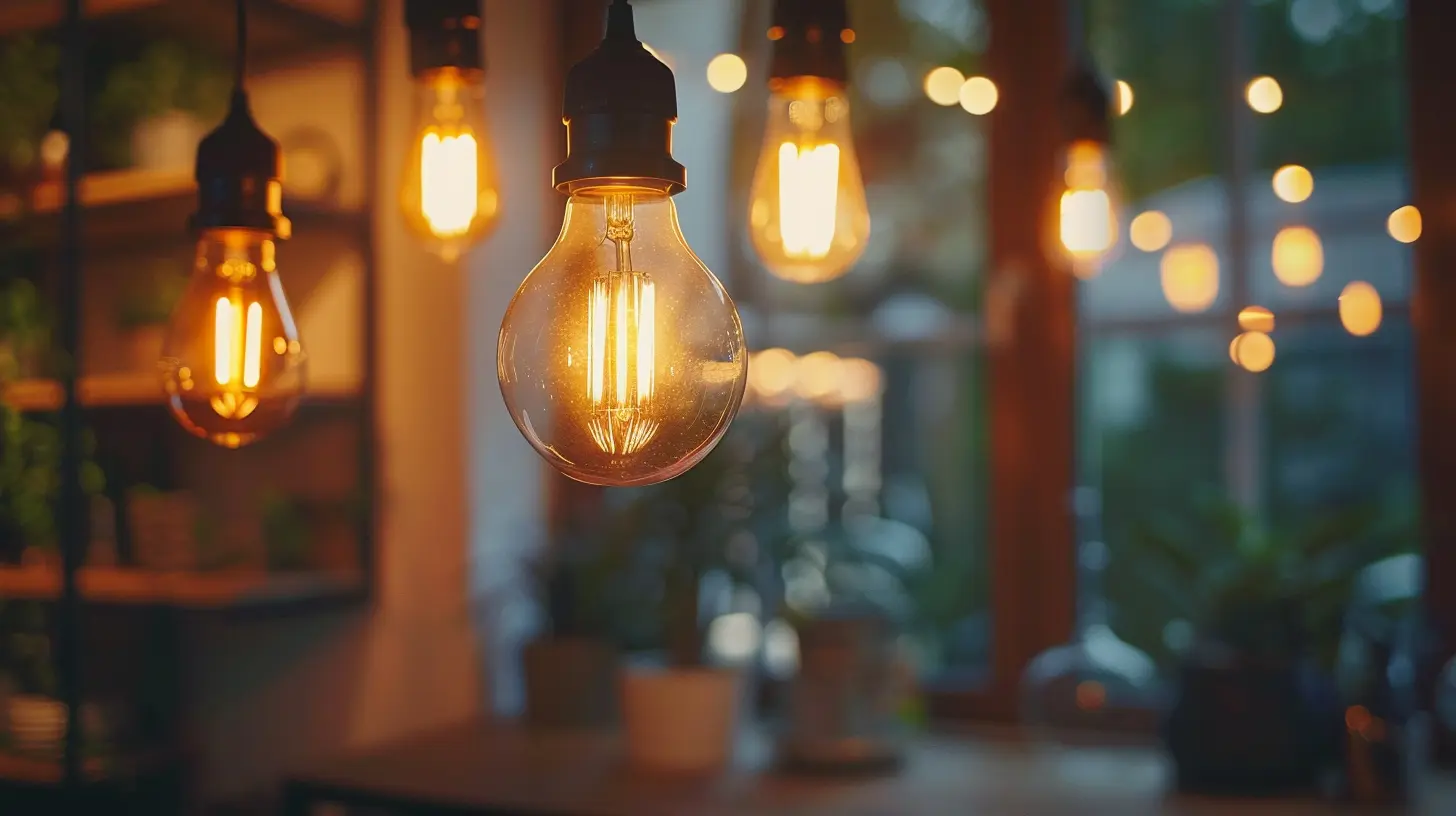
Why Lighting Changes a Room More Than Furniture Does
Furniture defines what is in a room. Light defines how you see it. The same sofa can look warm and inviting or cold and institutional depending on the color temperature and direction of the light hitting it. A wall painted in a rich green reads as deep and saturated under warm directional light and washed out under a bright ceiling panel.There is a practical reason for this. Your eye does not measure absolute brightness. It measures contrast. A room with one bright source and dark corners creates high contrast, which reads as dramatic but can feel uncomfortable for long periods. A room with several moderate sources at different heights creates low contrast, which reads as calm and spacious. Neither is universally better. A dining room benefits from some drama. A bedroom generally does not.
This is why lighting plans fail when they are built around fixtures instead of effects. The right question is not "what light do I want in the ceiling?" It is "what do I want this room to feel like at 7pm, and what is the light doing to make that happen?"
The Three Layers Every Room Needs
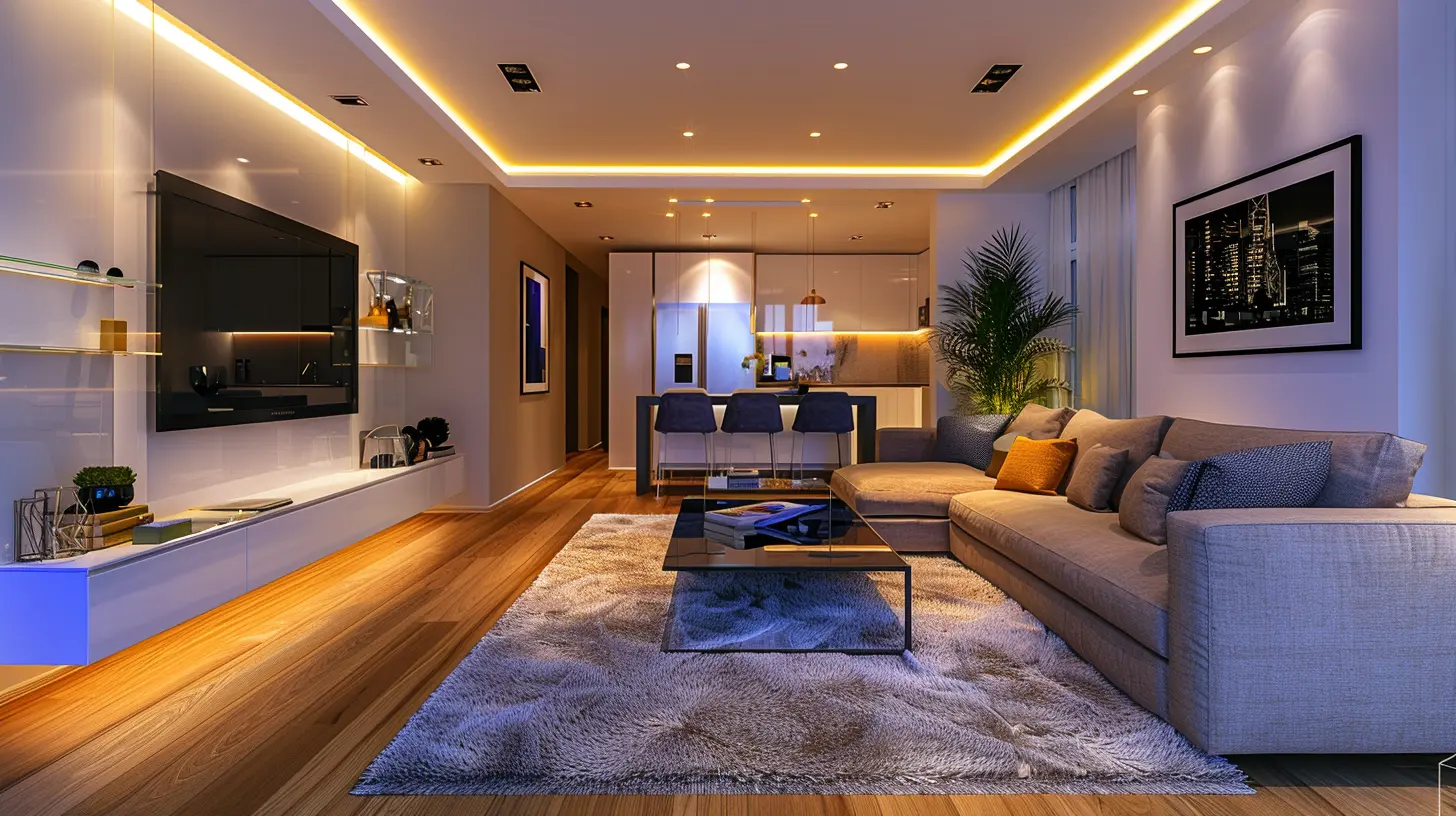
Professional lighting design almost always works in layers. The terminology varies, but the concept is consistent: ambient, task, and accent. Skip any one and the room feels incomplete. Overdo any one and it feels wrong.Ambient lighting: the base layer
Ambient light is the general illumination that lets you move around safely and see the room as a whole. It does not need to be bright. It needs to be even. The mistake most people make is assuming ambient light must come from the ceiling center. It can come from cove lighting, wall sconces, recessed fixtures placed at the perimeter, or a combination.A useful rule: if you can see the bulb from your normal seated position, the ambient light is probably too exposed. Glare is the enemy of a comfortable room, and the fix is usually to bounce light off a surface rather than point it at people.
Task lighting: the layer people forget
Task lighting is directional light for specific activities: reading, cooking, shaving, working at a desk. It should be bright enough to prevent eye strain and positioned so it does not cast your own shadow onto what you are doing. Under-cabinet lighting in a kitchen is task lighting. So is a reading lamp beside an armchair. So is a light above a bathroom mirror, ideally from the sides rather than straight overhead, because overhead light casts shadows down the face.The common failure here is relying on ambient light to do task work. Cooking under a single ceiling fixture means working in your own shadow half the time. Reading under a dim ambient glow means squinting. Task lighting is not optional if the room has a function.
Accent lighting: the layer that makes it feel designed
Accent lighting is deliberate and directional. It highlights texture, draws attention to architecture, or creates a mood. Picture lights, wall washers, uplights behind plants, and small lamps on a console table all fall into this category. Accent lighting is what separates a room that is merely lit from one that feels considered.The trade-off is control. Accent lighting works best on separate switches or dimmers so you can turn it off when you want the room to be purely functional. If everything is on one switch, you will either live with too much light or never use the accents at all.
Color Temperature: The Detail That Ruins Otherwise Good Rooms
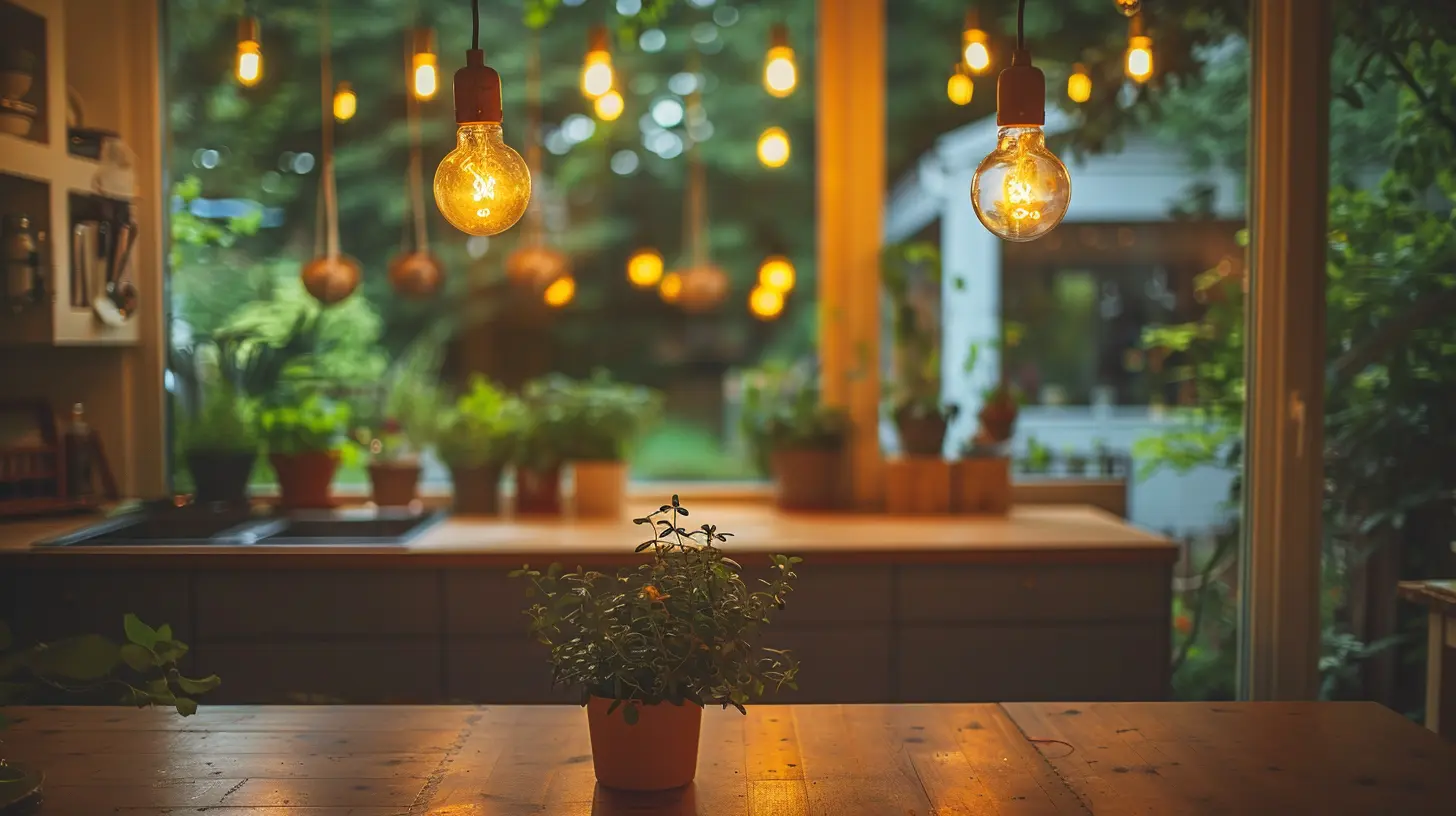
Color temperature is measured in kelvin. Lower numbers are warmer and more yellow-orange. Higher numbers are cooler and more blue-white. Most residential lighting sits between 2700K and 3000K, which reads as warm and familiar. Anything above 4000K starts to feel clinical in a home setting, which is why it belongs in garages and utility spaces, not living rooms.The real problem is mixing. A room with 2700K lamps in one fixture and 4000K in another looks broken, even if nobody can articulate why. The eye registers the mismatch as wrongness before the brain identifies the cause.
Before you buy any bulb, check the kelvin rating and try to stay consistent within a room and ideally across sightlines. A hallway visible from the living room should match the living room. This is one of the most common and most easily avoided mistakes in residential lighting.
There is a second variable people overlook: color rendering. The CRI, or color rendering index, describes how accurately a light source shows colors compared to natural light. Cheap bulbs often have low CRI, which makes wood look gray and skin look tired. For living spaces, look for a CRI of 90 or above. It costs slightly more and it is worth it.
Layering in Practice: Room by Room
Living rooms
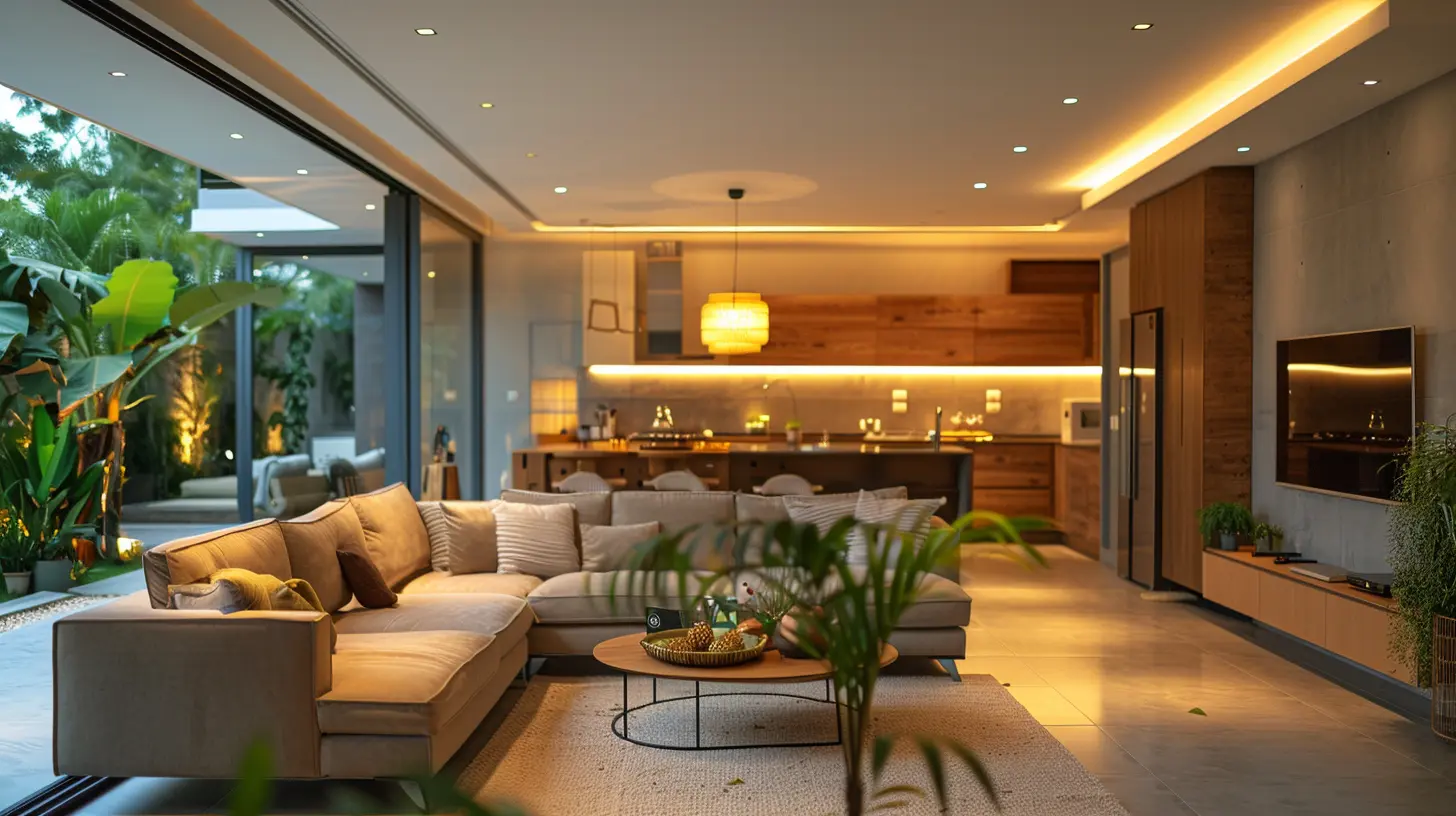
A living room needs flexibility because it serves several purposes. You might read there in the morning, host in the evening, and watch a film at night. That range demands dimmable layers on separate controls.A workable setup: a dimmable ambient layer, ideally from several small sources rather than one large one; a floor lamp or two beside seating for reading; a table lamp on a sideboard for soft fill; and one accent element, such as a picture light or an uplight in a corner. Put the ambient and accent layers on dimmers. If budget allows, separate the reading lamps onto their own switch so you can kill the ambient light entirely for movie nights.
The mistake to avoid: a single chandelier in the center of the ceiling. It will light the middle of the room and leave the edges dark, which makes the space feel smaller, not larger.
Kitchens
Kitchens are task-heavy and the lighting should follow the work. Ambient light from recessed fixtures or a ceiling fixture is fine, but the real gains come from under-cabinet lighting over counters and a dedicated light over the sink. If you have an island, pendant lights hung low enough to actually illuminate the counter, usually around 30 to 36 inches above the surface, do more than high-mounted fixtures that spread light everywhere except where you chop vegetables.Consider the finish of your surfaces. Glossy countertops and backsplashes reflect light and can create glare. Matte surfaces absorb it and need slightly more output. This is a real planning consideration, not a minor detail.
Bedrooms
Bedrooms should be dimmable and warm. Overhead light is useful for cleaning but unpleasant first thing in the morning and last thing at night. The better approach is bedside lamps for reading, a low-level ambient source, and a switch by the door that controls the ambient layer so you are not crossing a dark room to reach a lamp.Wall sconces mounted at reading height, roughly eye level when seated, free up nightstand space and give better light for reading than a lamp behind your shoulder. The trade-off is that sconces require wiring decisions during renovation, so they are easier to plan for than to add later.
Bathrooms
Bathroom lighting is where function dominates, but the atmosphere still matters. Light above the mirror should come from the sides, not directly overhead, to avoid shadows on the face. A vanity bar with diffused light works well. Add a separate ambient layer, ideally on a dimmer, for evening use. Nothing is less relaxing than a bright bathroom at midnight.Make sure fixtures in wet zones are rated for the location. This is a safety matter, not a style preference, and local codes vary, so check before installing anything within reach of a shower or tub.
Dimming: The Single Highest-Impact Upgrade
If you do one thing after reading this, put the main lights in your most-used rooms on dimmers. Dimming does more for atmosphere than swapping fixtures, and it costs far less.There is a catch that trips up a lot of people. Not all bulbs dim well. Cheap LEDs can flicker, buzz, or drop out at low levels. The fix is to use dimmable bulbs and a dimmer rated for LED loads, and to check compatibility between the two. Manufacturers publish compatibility lists for exactly this reason. Buying a dimmer and bulbs separately without checking is how people end up with a flickering room and a grudge against LED lighting.
A second consideration: dimming changes color temperature on some bulbs. A bulb that is warm at full brightness may shift cooler as it dims, or the reverse. If consistency matters to you, look for bulbs that maintain their color temperature across the dimming range. This is sometimes called dim-to-warm, and it mimics the behavior of incandescent bulbs, which get warmer and more orange as they dim. Some people love that effect in the evening. Others find it too orange. Know which camp you are in before you buy.
Common Mistakes and Misconceptions
More light is not better. Brightness is not the goal. Comfort and control are. A room with too much even light feels clinical. A room with layered, adjustable light feels alive.Recessed lights are not a complete plan. A grid of recessed fixtures in the ceiling is a common default, and it is rarely the best answer. It creates flat, even light with no hierarchy and no warmth. Use recessed lighting sparingly, ideally at the perimeter to wash walls, and supplement with layers.
Lamp placement matters more than lamp style. A beautiful lamp in the wrong spot does nothing. A plain lamp placed to bounce light off a wall or illuminate a reading chair does a lot. Think about what the light should hit before you think about what the fixture looks like.
Wattage is not brightness. With LEDs, watts measure power draw, not output. Look at lumens for brightness and kelvin for color. This confuses people who grew up with incandescent bulbs, and it leads to badly lit rooms.
Big fixtures do not equal good light. A large chandelier can dominate a room visually while providing poor illumination. Scale and output are separate questions. A small, well-placed fixture often outperforms a large one in the wrong position.
Planning Before You Buy
Before purchasing anything, walk through each room at the times of day you actually use it and note where the light falls short. Morning light differs from evening light, and a room that feels fine at noon can feel grim at night. Do this in winter too, when natural light is scarce.Then sketch a simple plan. Mark the switch locations, the main seating and work areas, and where you want light to fall. Decide which layers each room needs and how you want to control them. Only then start shopping. This order matters because fixtures are easy to fall in love with and hard to return, and a plan keeps you from buying a statement piece that does not fit the room's actual needs.
Finally, budget for the invisible parts. Dimmers, wiring, and quality bulbs are not exciting, but they determine whether the room works. A modest fixture on a good dimmer with high-CRI bulbs will outperform an expensive fixture on a cheap switch every time.
Lighting rewards planning more than spending. Get the layers right, keep the color temperature consistent, control the brightness, and the atmosphere takes care of itself.
all images in this post were generated using AI tools
Category:
Home ImprovementAuthor:

Kingston Estes