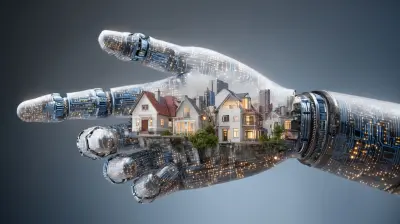
Homebuying Predictions That Could Come True in 2026
17 April 2026
Remember when the idea of ordering a taxi from your phone seemed like science fiction? Or when working from home was a rare perk, not a standard option? The real estate market evolves not with a bang, but with a steady, relentless drip of innovation, economic shifts, and changing human desires. As we stand here, looking toward 2026, the horizon is shimmering with possibilities that are equal parts exciting and daunting.
So, let’s put on our futurist hats—not the tinfoil kind, but the thoughtfully curious ones. What if we could peek into the real estate crystal ball? What homebuying predictions are simmering today that might just be our everyday reality by 2026? Buckle up; we’re not just talking about interest rates. We’re diving into a world where your home might know you better than you know yourself, and the very idea of "location" is getting a digital makeover.

The Great Reshuffling Enters Its Next Phase: The "Why" Behind the "Where"
We all felt the initial quake of The Great Reshuffling—the sudden, pandemic-fueled flight to suburbs and sunbelt states. But by 2026, this won’t be a reactive scramble. It will mature into a deliberate, values-driven migration. The question won’t just be "Can I work from there?" but "Why do I want to live there?"Subheading: The Rise of the "Climate-Proof" Portfolio
Think about it: after a few more years of intensifying wildfire seasons, historic floods, and tightening insurance markets, homebuyers will start thinking like savvy investors. They won't just assess a home’s curb appeal; they’ll scrutinize its climate resilience. We’ll see a tangible split in the market. Properties with features like built-in backup power, fire-resistant materials, superior drainage, and access to resilient water sources will command a significant "climate premium." Conversely, homes in areas deemed high-risk without these mitigations might see values stagnate or become harder to insure. Buying a home will increasingly feel like buying a physical stock in a region’s future.
Subheading: Proximity to "Third Places" Over Proximity to The Place
The five-day office commute is, for many, a relic. So, the 60-minute rule is dissolving. But humans are social creatures; we need connection. By 2026, I predict we’ll see a surge in demand for homes within a 15-minute walk or bike ride not of a downtown core, but of a vibrant, mixed-use "third place" hub. This could be a main street with a great coffee shop, a co-working space, a microbrewery, a clinic, and a park. The premium will shift from "close to the city" to "embedded in a complete, walkable community." The home becomes the anchor, but the thriving, hyper-local ecosystem around it becomes its most valuable feature.
The AI Co-Pilot: Your Hyper-Personalized Homebuying Assistant
Imagine if your best friend, your most analytical financial advisor, and a real estate savant all merged into one, available 24/7. That’s the promise of AI in homebuying by 2026. This won’t be about cold, algorithmic listings. It will be about deeply personalized guidance.Subheading: From Search Filters to Life Filters
Today, we search by bedrooms, bathrooms, and price. Ho-hum. The AI tools of 2026 will learn your life patterns. It will know you hate north-facing kitchens because you love morning sun, that you need soundproofing because you practice the drums, that your allergy to oak trees means it should filter out streets lined with them. It will cross-reference your calendar, suggesting neighborhoods that minimize commute times for your in-office days while prioritizing quiet for your deep-work days. It will analyze your social media (with permission, of course) to suggest areas with communities that share your hobbies. The search becomes less about the house and more about how a potential home fits into the intricate puzzle of your life.
Subheading: The Emotion Decoder: Seeing Beyond the Staging
We’ve all been duped by beautiful staging and wide-angle lenses. AI will cut through the veneer. Advanced image recognition and natural language processing will scan listing photos, descriptions, and even previous inspection reports (where available) to generate risk and compatibility scores. It might flag: "High potential for basement moisture based on grading in photo #3," or "The kitchen renovation uses materials 40% above median cost for the neighborhood, suggesting high owner investment and care." It turns the overwhelming emotional rollercoaster of homebuying into a data-informed journey, giving you confidence to trust your gut—or question it.

The New Currency: Flexibility, Equity, and Digital Footprints
The financial mechanics of buying a home are creaking under the weight of new realities. By 2026, I believe we’ll see some fascinating new models take root.Subheading: Fractional Ownership and the "Home Share"
The soaring cost of entry will make full, sole ownership out of reach for many. Enter sophisticated fractional ownership platforms. This isn’t just a timeshare. Think of it like buying a share of a stock, but the stock is a beautiful mountain cabin or a downtown condo. You own a deeded, tradable percentage, guaranteeing you usage rights for a set period each year, with all costs and upkeep managed professionally. For millennials and Gen Z building wealth, this could be a way to gain exposure to real estate equity without the massive down payment and full responsibility. It turns a home from a singular asset into a shareable, flexible one.
Subheading: Your "Live-In" History as a Credit Score
This one’s a bit "Black Mirror," but stay with me. What if your reliability as a tenant could directly help you become an owner? By 2026, we might see the early adoption of alternative credit models that incorporate your rental payment history, utility bill consistency, and even maintenance request behavior (did you report issues promptly and respectfully?) into a mortgage qualification score. For the "credit invisible" or those with thin files, this could be a game-changer. Your track record of being a good steward of a property you don’t own could finally be your ticket to owning one. It reframes the narrative from "Can you pay?" to "Have you proven you can care for a home?"
The Physical-Digital Blend: The Metaverse Isn’t Replacing Reality, It’s Augmenting It
Forget the hype about living in VR goggles. The real impact of the metaverse and Web3 by 2026 will be more practical, acting as a powerful layer on top of our physical world.Subheading: The Pre-Purchase "Life Test Drive"
Virtual and augmented reality tours are standard now. By 2026, they’ll be immersive simulations. You won’t just see the empty living room. You’ll use AR to project your own furniture into the space, at true scale. You’ll be able to simulate the sun’s path at different times of the year to check for light. You’ll hear ambient soundscapes—what does the street sound like on a Saturday afternoon? You can "test" your commute via a virtual drive, or see how far the walk to the grocery store really feels. It reduces the "unknowns" to near zero, allowing for more confident remote purchases.
Subheading: The Digital Deed: Blockchain's Quiet Revolution
The most boring part of real estate—the title search, the deed, the endless paperwork—is ripe for disruption. Blockchain technology promises a future of "digital deeds." Imagine a secure, unchangeable, and transparent digital ledger that records every single transaction, lien, and permit for a property from the day it was built. Buying a home could involve a seamless, fraud-proof digital closing that takes hours, not weeks. The title insurance industry might look very different. This prediction is less about the flashy buyer experience and more about the critical, trust-based infrastructure that makes it all possible.
The Human Heart in a High-Tech Market
Amidst all this talk of AI, blockchain, and climate data, one timeless truth will remain, perhaps even intensify by 2026: the home is a human sanctuary. All this technology serves one ultimate purpose: to reduce friction, anxiety, and risk so we can focus on what truly matters—finding a place where we belong, where we can build memories, and where we feel safe.The homebuyer of 2026 will be empowered, informed, and equipped with tools we can barely imagine today. But their core desire? That will be beautifully, reassuringly familiar. They’ll just have a much smarter co-pilot for the journey.
So, are you ready? The future of homebuying isn't a distant fantasy. It's being built in tech labs, shaped by climate reports, and dreamed up in the minds of buyers just like you, who are asking for a better way. The keys to 2026 are being forged today.
all images in this post were generated using AI tools
Category:
Real Estate NewsAuthor:

Kingston Estes
Discussion
rate this article
2 comments
Valeria McKinnon
Great insights in this article! The predictions for the real estate market in 2026 offer valuable perspectives for potential homebuyers. It's important to stay informed about trends and shifts in the market. Looking forward to seeing how these forecasts develop in the coming years. Thank you for sharing!
April 21, 2026 at 3:44 AM
Kingston Estes
Thank you for your thoughtful comment! I'm glad you found the insights valuable. It'll be interesting to see how these predictions play out in the coming years.
Samuel Fuller
Great insights! It’s fascinating to consider how these predictions may shape the real estate market and homebuying landscape in 2026.
April 19, 2026 at 3:00 AM
Kingston Estes
Glad you found it insightful! It’ll be exciting to see which of these predictions actually take shape.