What Commercial Real Estate Might Look Like in 2027
8 September 2026
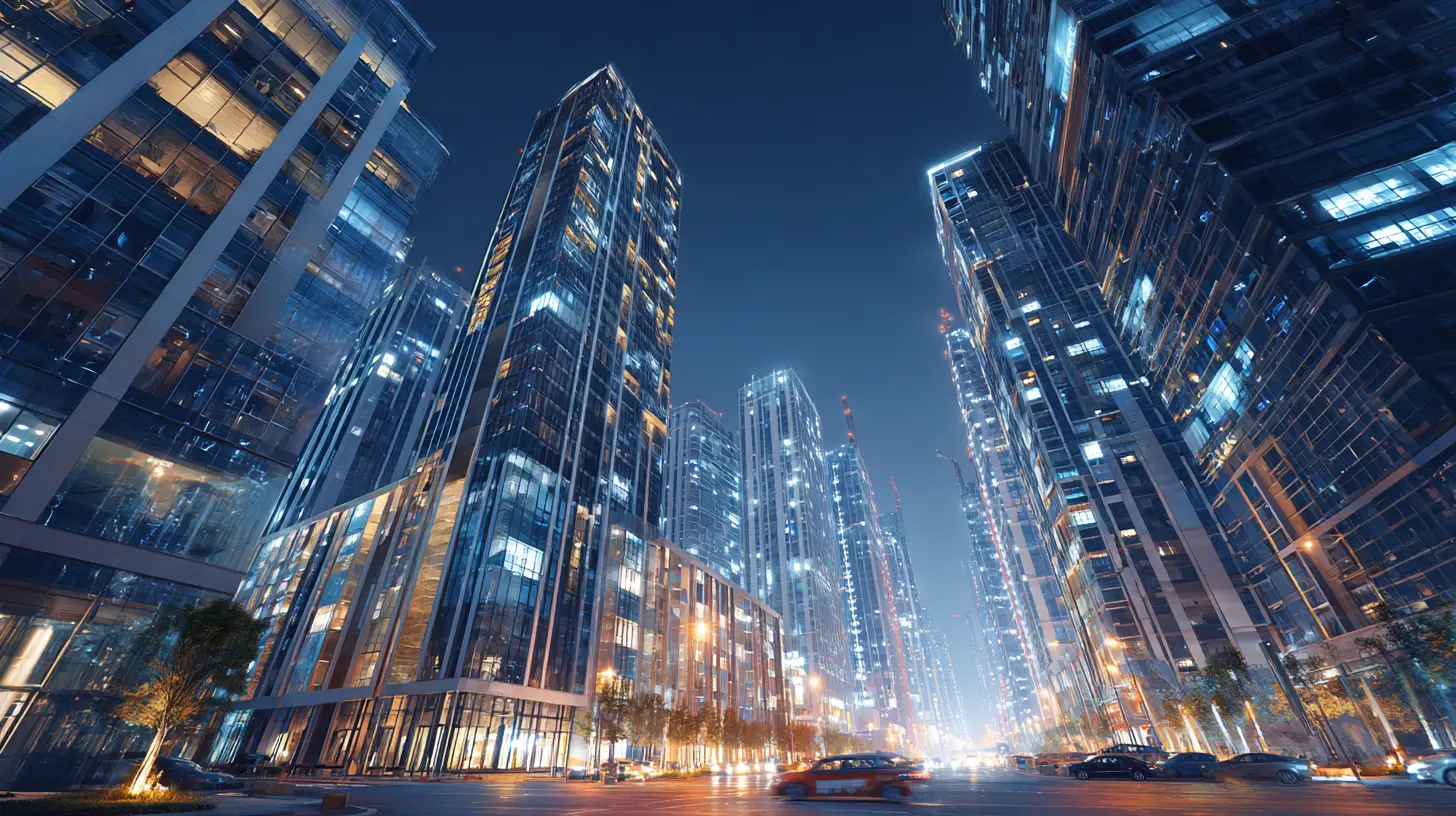
If you are reading this, you probably have a stake in commercial real estate, whether you own a small retail strip, manage an office portfolio, or underwrite loans for industrial assets. The last few years have felt like a weather vane in a hurricane. Interest rates swung violently, occupancy patterns broke, and the very definition of "prime" location shifted. Looking ahead to 2027 is not about predicting the next shiny object. It is about preparing for a market that will reward patience, precision, and a willingness to unlearn old habits.
The commercial real estate market in 2027 will not be a single story. It will be a collection of micro-markets defined by building quality, tenant credit, and the ability to adapt physical space to human behavior. The era of buying a generic asset, putting a sign on it, and waiting for appreciation is over. The next three years will separate operators from speculators.
The Office Market: Smaller, Better, and Radically Different
The office sector will not die by 2027, but it will be unrecognizable to someone who last leased space in 2019. The headline is simple: total square footage will continue to shrink, but the rent per square foot for the best buildings will hold or even grow. This is not a contradiction. It is a bifurcation.
Class A trophy towers in central business districts with access to transit, outdoor space, and collaborative floor plates will command a premium. They will be leased to firms that use the office for specific purposes: client meetings, team onboarding, complex problem-solving, and cultural reinforcement. These companies will not rent space for heads-down work that can be done at home. They will rent it for the friction that sparks creativity.
The middle of the market is where the pain will concentrate. Older Class B buildings with inefficient floor plans, poor air quality, and outdated lobbies will face vacancy rates that make current numbers look optimistic. By 2027, many of these buildings will have been converted to residential, laboratory space, or even data centers. Some will be demolished. The ones that survive will need massive capital infusions, not for cosmetic upgrades but for mechanical and structural reinvention.
A common mistake owners make is assuming that a fresh coat of paint and a new coffee bar will solve the problem. It will not. In 2027, the office will compete with the home office on a level playing field. To win, a building must offer something that a renovated spare bedroom cannot: specialized acoustics, high-bandwidth redundancy, on-site childcare, or medical-grade air filtration. If you are an owner, ask yourself whether your asset can deliver these things without spending more than the building is worth. If the answer is no, your exit strategy should be conversion or sale, not renovation.
Tenants will also behave differently. Expect shorter lease terms, with options to expand or contract based on headcount. This flexibility will come at a price. Landlords who offer true flexibility will charge higher base rents to compensate for the risk. The old model of a ten-year lease with annual escalations will be reserved for government entities and a few blue-chip corporations. Everyone else will want three to five years with break clauses.
Retail: Not Dead, Just Reborn as Experience Infrastructure
The conventional wisdom is that retail is dying. In 2027, that will be true only for the undifferentiated middle. The retail that thrives will be a destination, not a convenience. Grocery-anchored centers will continue to perform, but the anchor itself will change. Traditional supermarkets will face pressure from discounters and online delivery. The winning centers will be anchored by something else: a fitness club with recovery amenities, a medical clinic, a fresh food hall, or a community theater.
Think of retail in 2027 as physical infrastructure for human connection. People are lonely. They are starved for experiences that cannot be downloaded. The shopping center that becomes a third place, a space between home and work where people feel welcomed and entertained, will have pricing power. This means the tenant mix must be curated like a playlist, not leased to the highest bidder.
A practical example is the rise of "retail-tainment" venues. Bowling alleys, indoor golf simulators, axe-throwing bars, and immersive art installations are not fads. They are anchors that draw foot traffic on weekends and evenings, which are the hours that matter most. The mistake owners make is leasing to these operators with the same financial requirements as a clothing store. These businesses often have high revenue but thin margins due to labor and equipment costs. You need to underwrite them differently, perhaps with percentage rent tied to ticket sales or a lower base rent in exchange for a longer commitment.
Another misconception is that all e-commerce is killing physical stores. The reality is more nuanced. Online brands are opening physical locations, not because they need to sell more products but because they need to reduce return rates and build brand loyalty. A customer who touches a product is less likely to send it back. By 2027, expect to see more showroom models where the store is not the point of sale but the point of discovery. The rent for these spaces will be paid out of the marketing budget, not the retail budget. Landlords who understand this will structure leases with performance clauses and data-sharing agreements.
Industrial and Logistics: The End of the Gold Rush
Industrial real estate has been the darling of the past five years. The demand for warehouse space exploded with e-commerce, and investors piled in. By 2027, the sector will mature, and the easy money will be gone. Vacancy rates will rise in secondary markets where developers overbuilt in 2022 and 2023. The days of leasing a plain-vanilla box at record rents are fading.
What will matter is location relative to population density and labor availability. The last-mile delivery model is shifting. Instead of giant warehouses on the outskirts of cities, we will see a network of smaller, multi-story facilities closer to consumers. This is expensive to build and complex to operate, but it solves the problem of delivery speed and labor shortages.
Automation will also change the underwriting process. By 2027, a warehouse without a clear path to automation will be considered obsolete. This does not mean every building needs robots. It means the building must have the structural capacity for robotic systems: flat floors, high clear heights, heavy power supply, and sufficient roof load for solar panels and HVAC. The cost of retrofitting an older building for automation can be prohibitive. If you are buying an industrial asset, pay for a detailed engineering study before you sign the contract.
A significant trend to watch is the conversion of old retail and office space into industrial uses, specifically for "micro-fulfillment" centers. These are small facilities, often under 50,000 square feet, located inside urban areas. They handle the final step of the delivery process, picking and packing items for same-day delivery. This is a niche opportunity, but it requires zoning changes and community buy-in. Many municipalities are hostile to this use because of truck traffic and noise. A patient investor who works with local government to design a facility that mitigates these concerns can create an asset that is nearly impossible to replicate.
Capital Markets and Financing: The Great Repricing Continues
The most important shift between now and 2027 will be the permanent repricing of risk. For fifteen years following the 2008 financial crisis, money was artificially cheap. Investors could buy assets with low leverage and still achieve acceptable returns because the cost of debt was negligible. That era is gone. In 2027, the risk-free rate will be higher, and cap rates will have adjusted accordingly. This is not a temporary blip. It is a structural change.
The implication is that the "spread" between the risk-free rate and the cap rate will normalize to historical averages. This means that asset values will not return to their 2021 peaks in most sectors. Sellers who are waiting for the market to recover to those levels will be waiting a long time. The smart play is to accept the new reality and focus on cash flow rather than appreciation.
Debt will be harder to get, and the terms will be less generous. Loan-to-value ratios will be lower, often capped at 60 or 65 percent for non-stabilized assets. Amortization schedules will be shorter, and interest-only periods will be rare. Borrowers will need to bring more equity to the table. This is not necessarily a bad thing. It forces discipline and prevents the kind of overleveraged speculation that led to the last crash.
A common mistake is assuming that banks will behave as they did in the past. Regional banks, which were the lifeblood of smaller commercial deals, are under pressure from deposit outflows and regulatory scrutiny. By 2027, many of these banks will have merged or retreated from commercial lending. Borrowers will need to diversify their capital sources. This means building relationships with credit unions, private credit funds, and insurance companies. It also means considering alternative structures like preferred equity or mezzanine debt to bridge the gap between what a senior lender will provide and what the asset requires.
The Role of Technology and Data
By 2027, the use of artificial intelligence in real estate will be standard practice, not a competitive advantage. The advantage will come from the quality of the data and the questions you ask. AI can analyze traffic patterns, demographic shifts, and leasing comps faster than any human. But it cannot tell you whether a particular tenant will be a good partner or whether the local community will embrace a new development.
The best operators will use technology to enhance their judgment, not replace it. For example, AI can predict which buildings are likely to experience tenant defaults based on financial data and market trends. This allows an owner to engage with a struggling tenant early, perhaps offering a temporary rent reduction in exchange for a lease extension. This kind of proactive management is impossible without good data.
Another area where technology will have a profound impact is property management. Sensors that monitor occupancy, energy use, and air quality will become standard. This is not just about cost savings. It is about tenant retention. A tenant who feels that their building is responsive, efficient, and healthy is less likely to leave. In 2027, the property manager will be the most important role in the industry. The days of hiring a retired person to hand out keys are over. The role will require technical literacy, financial acumen, and genuine customer service skills.
Environmental, Social, and Governance: From Slogan to Survival
The acronym ESG has become politicized, but the underlying pressures are not going away. By 2027, energy efficiency will be a matter of survival, not just branding. Many cities have enacted building performance standards that mandate significant reductions in carbon emissions. Buildings that fail to comply will face fines and, in some cases, be unable to lease space.
The cost of retrofitting a building to meet these standards can be substantial. A full electrification project, replacing gas boilers with heat pumps and adding solar panels, can run into the millions for a large building. But the alternative is worse. As the regulatory environment tightens, these buildings will become stranded assets. No tenant will want to lease space in a building with a poor energy rating, and no lender will want to finance it.
There is a practical middle ground. Start with the low-hanging fruit: lighting upgrades, smart thermostats, and water conservation. These measures have a quick payback and demonstrate a commitment to sustainability. Then, phase in larger projects as leases roll over and capital becomes available. The key is to begin now. In 2027, it will be too late to start planning.
The "social" part of ESG is also evolving. Communities are demanding that developers and owners engage with them meaningfully. This is not just about affordable housing, although that is a part of it. It is about creating spaces that serve the neighborhood. A retail center that provides a free community room for local groups will be viewed more favorably than one that does not. An office building that opens its plaza to the public on weekends builds goodwill. These gestures do not always show up on a pro forma, but they reduce the risk of political opposition and zoning delays.
Practical Advice for the Next Three Years
If you are an owner, start by stress-testing your portfolio against a scenario where interest rates stay where they are for another two years. How much debt is coming due? Can you refinance at a higher rate and still break even? If not, consider selling assets that are not core to your strategy. Better to sell a Class B office at a discount than to face a foreclosure in 2026.
If you are a tenant, be bold in your negotiations. Landlords are anxious about vacancy. Use this leverage to secure favorable terms, but remember that a good relationship is worth more than a small rent reduction. Do not squeeze your landlord to the point where they cannot maintain the property. A well-maintained building benefits you as much as it does them.
If you are an investor, look for opportunities in the chaos. There will be distressed assets available, but they will require a longer hold period and more hands-on management. The skills that will be rewarded are not financial engineering but operational excellence. Can you lease space in a difficult market? Can you manage a complex renovation? Can you navigate local politics? If the answer is yes, there will be plenty of opportunity.
Final Thoughts
The commercial real estate market of 2027 will be more fragmented, more complex, and more demanding than the market of the past decade. It will not reward passive ownership or speculative flipping. It will reward those who understand that real estate is not about buildings; it is about the people who use them. The building is just the shell. The value is in the service, the experience, and the relationship.
Be patient. Be disciplined. Do not chase yield at the expense of quality. And always remember that the best deals are the ones you can hold onto through the cycle. The market will turn, as it always does. The question is whether you will be positioned to take advantage of the upswing or caught on the wrong side of the downturn. The work you do now will determine that answer.
all images in this post were generated using AI tools
Category:
Real Estate NewsAuthor:

Kingston Estes
Discussion
rate this article
2 comments
Damien Chapman
As we look toward 2027, adaptability will be key in commercial real estate. Innovations in technology, shifting consumer habits, and sustainability will shape spaces. The focus will likely shift from mere occupancy to creating vibrant, multifunctional environments that foster community engagement.
September 16, 2026 at 12:07 PM
Kingston Estes
Absolutely, adaptability will be crucial. Embracing technology and sustainability while prioritizing community will redefine our spaces in the coming years. Exciting times ahead!
Beatrix McElveen
The future of commercial real estate will hinge on technology and sustainability, reshaping spaces and tenant expectations significantly.
September 16, 2026 at 3:31 AM
Kingston Estes
I completely agree. Technology and sustainability are key drivers that will redefine commercial real estate, influencing everything from design to tenant experiences. Exciting times ahead!