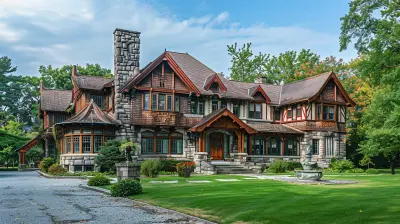
The State of the Second Home Market Heading into 2027
11 September 2026
The second home market has always been a mirror held up to the broader economy, reflecting not just interest rates and housing supply but also the emotional and lifestyle priorities of buyers. As we move toward 2027, that mirror is showing a picture that looks quite different from the frenzied pandemic-era scramble for vacation properties. The market is maturing, cooling in some segments, tightening in others, and quietly reshaping itself around a new set of buyer motivations.
For anyone considering buying, selling, or holding a second home over the next two to three years, understanding these shifts is not optional. The decisions made in this window will likely determine whether a property becomes a long-term asset or a lingering financial burden.

The Big Picture: From Frenzy to Fundamentals
Between 2020 and 2022, second home purchases surged. Remote work untethered millions of buyers from their primary offices, and low mortgage rates made financing a vacation property almost painless. Markets like the Catskills, the Carolinas, coastal Florida, and mountain towns in Colorado and Utah saw bidding wars that rivaled primary residence markets.That era is over. Heading into 2027, the market is being shaped by three structural forces:
1. Higher borrowing costs that have settled into a "new normal" range rather than returning to the sub-4% era.
2. A shift in buyer demographics, with younger buyers entering the market and older buyers either holding or exiting.
3. Rising ownership costs, including insurance, property taxes, HOA fees, and maintenance, which have outpaced general inflation in many resort markets.
The result is a market that rewards discipline and punishes speculation. Buyers who approach a second home as a lifestyle purchase with investment characteristics, rather than the other way around, are faring far better.

Who Is Buying Second Homes in 2027
The buyer profile has shifted meaningfully. Three distinct groups now dominate.The Long-Hold Lifestyle Buyer
These are typically buyers in their late 40s to early 60s who plan to use the property for a decade or more, often with an eye toward eventual retirement. They tend to pay larger down payments, finance less, and care deeply about community, healthcare access, and long-term livability.For this group, the second home is not a short-term rental play. It is a future primary residence in waiting. This mindset changes what they should look for: proximity to hospitals, walkability, low-maintenance construction, and a tax environment that will remain favorable in retirement.
The Hybrid Worker
This buyer works remotely at least part of the time and wants a property that functions as a genuine second office and residence. They are less tied to traditional vacation destinations and more interested in places with reliable internet, reasonable year-round weather, and access to a major airport within a two-hour drive.The hybrid worker is reshaping demand in unexpected markets. Towns that were once strictly seasonal are now seeing year-round activity, which supports local businesses but also drives up prices and strains infrastructure.
The Investor Who Learned a Lesson
Many short-term rental investors who entered between 2020 and 2022 have since discovered that the math is harder than it looked. Local regulations, saturation, and rising cleaning and management costs have compressed margins. The investors still active heading into 2027 tend to be more sophisticated, focusing on markets with genuine scarcity and long-term demand rather than chasing the highest nightly rate.
The Financing Reality
One of the most misunderstood aspects of second home ownership is how it is financed. Heading into 2027, several realities deserve attention.Second Home Loans Cost More
Lenders typically price second home mortgages higher than primary residence loans because the risk of default is considered greater. Expect rate premiums that can range from a quarter point to well over a full point, depending on the lender and the borrower's profile.Debt-to-Income Calculations Are Stricter
Because the borrower is already carrying a primary mortgage, lenders often require lower debt-to-income ratios. This means a buyer who comfortably qualified for their primary home may find that the same income does not stretch as far on a second property.Cash-Out Strategies Carry Hidden Risks
Some buyers fund a second home by taking equity out of their primary residence. This can work, but it converts a stable, low-rate primary mortgage into a larger obligation tied to a discretionary asset. If the second home is later sold at a loss or sits vacant, the primary residence is still on the hook.A practical rule: if the numbers only work when the property is rented out most of the year, the buyer is not really purchasing a second home. They are purchasing a business, and they should evaluate it as one.

Where the Demand Is Moving
Geography is not destiny, but it matters more in this market than it has in years.Inland and Secondary Markets Are Gaining
Buyers priced out of marquee coastal and ski destinations are pushing into secondary markets. A lake town two hours from a major metro, or a small city with a growing food and arts scene, can offer much of the lifestyle at a fraction of the cost.The trade-off is liquidity. These markets can be slower to sell in a downturn, and price appreciation is rarely as dramatic as in trophy destinations. Buyers who prioritize affordability and usability over prestige often do well here.
Coastal Markets Are Splitting
High-end coastal markets with genuine scarcity continue to hold value. But mid-tier coastal markets, especially those heavily dependent on short-term rentals, are showing signs of oversupply. Insurance costs in hurricane and flood zones have become a genuine deterrent, and in some cases, a deal-breaker.Anyone buying in a coastal market heading into 2027 should get insurance quotes before making an offer. Not after. In some markets, the annual premium can exceed the property tax bill, and that changes the entire ownership calculation.
Mountain and Lake Towns Are Normalizing
The pandemic-driven surge in mountain and lake towns has largely run its course. Prices in many of these markets have flattened or dipped modestly. For buyers who were priced out in 2021, this is an opportunity, provided they can tolerate the possibility of further softness in the short term.The True Cost of Ownership
One of the most common mistakes buyers make is underestimating the carrying cost of a second home. It is not just the mortgage.A realistic annual budget should include:
- Property taxes, which in many resort markets are rising faster than inflation
- Insurance, which has increased sharply in climate-exposed areas
- HOA or condo fees, which can rise unpredictably
- Utilities, landscaping, and snow removal
- Maintenance and eventual capital expenditures, such as a roof or HVAC system
- Property management fees, if the owner rents the property
- Travel costs to and from the property, which are easy to overlook
A useful exercise: take the total annual cost and divide it by the number of nights the owner realistically expects to use the property. The per-night figure is often startling. If it exceeds what a high-end hotel or rental would cost, the buyer should be honest about whether the emotional and lifestyle benefits justify the premium.
Short-Term Rentals: The Regulatory Wild Card
For years, renting out a second home on a short-term basis was the default strategy for offsetting costs. Heading into 2027, that strategy is under pressure.Many municipalities have tightened rules around short-term rentals. Some require owner occupancy, some cap the number of nights, and some have effectively banned new permits in residential zones. These rules vary enormously from one jurisdiction to the next, and they can change with little warning.
The practical implication is that buyers should never underwrite a purchase based on short-term rental income unless they have verified the current rules and are comfortable with the possibility that those rules could tighten further. A property that only works as a rental is a property that could become a financial problem overnight.
Long-term rentals are often a more stable alternative, though they come with their own trade-offs, including tenant management and the loss of flexibility for personal use.
Common Mistakes and Misconceptions
Several myths persist in this market, and they cost buyers real money."It Will Pay for Itself"
Very few second homes pay for themselves. Even in strong rental markets, the combination of mortgage, taxes, insurance, maintenance, and management fees typically exceeds rental income. Buyers who expect a break-even or profitable property are usually disappointed."Prices Only Go Up"
Second homes are discretionary assets. In downturns, they can fall faster and recover more slowly than primary residences because demand is more elastic. Buyers should be prepared to hold through a full cycle."I Will Use It All the Time"
Owners consistently overestimate how often they will visit. Work, family obligations, and simple fatigue reduce actual usage. A realistic estimate is often half of what the buyer imagines during the emotional peak of a purchase."The Rental Manager Will Handle Everything"
Property management can be excellent, but it is not passive. Owners still make decisions, field issues, and bear responsibility for the asset. Treating a second home as fully passive is a recipe for surprises.
Best Practices for Buyers Heading into 2027
For those who have decided a second home makes sense, several practices separate successful owners from regretful ones.Visit in the off-season. A beach town in February or a ski town in June reveals a different reality than peak season. If the buyer does not enjoy the property in the shoulder months, they may not enjoy owning it.
Rent before buying. Renting in the target market for a month or more provides insight that no weekend visit can match. It also builds relationships with local agents, contractors, and managers.
Get a full cost estimate in writing. Before making an offer, assemble a realistic annual budget that includes every line item. If the total is uncomfortable, the property is probably not the right fit.
Understand the exit. Even if the plan is to hold for 20 years, circumstances change. Knowing how long properties typically sit on the market in the area, and what the buyer pool looks like, is essential.
Consider the tax implications. Second home ownership carries specific tax rules around mortgage interest deduction, capital gains, and rental income. A qualified tax professional should be involved before, not after, the purchase.
Best Practices for Sellers
For owners considering selling into 2027, the market rewards preparation.Pricing realistically is the single most important factor. Sellers who anchor to peak-pandemic comparable sales often sit on the market for months while better-priced properties move. A well-prepared property, with updated photos, clear disclosures, and a realistic price, will attract serious buyers even in a slower market.
Sellers should also weigh the cost of holding. If the property is not generating meaningful personal use or income, the carrying costs add up quickly. Sometimes selling at a modest discount is better than holding for another year of expenses.
What to Watch Through 2027
Several variables will shape the market over the next two years.Interest rate policy remains the most significant. Even modest rate declines can unlock demand among buyers who have been waiting on the sidelines. Conversely, sustained higher rates will continue to pressure prices in overbuilt or speculative markets.
Insurance availability and cost will matter enormously, particularly in coastal and wildfire-prone areas. In some markets, the inability to secure affordable coverage is already functioning as a de facto moratorium on sales.
Local regulation of short-term rentals will continue to evolve, and buyers should treat any current rules as temporary.
Finally, demographic trends will quietly reshape demand. As baby boomers age, many will sell second homes to simplify their lives, potentially adding supply to certain markets. At the same time, younger buyers with different preferences will create demand in new places.
A Balanced Outlook
The second home market heading into 2027 is neither a crash nor a boom. It is a market that has returned to something closer to normal, where fundamentals matter, where financing costs are real, and where the emotional appeal of a property must be balanced against its financial reality.For buyers, this is arguably a healthier environment than the frenzy of 2021. There is time to think, negotiate, and walk away from a bad deal. For sellers, it demands realism and preparation. For long-term owners, it is a reminder that a second home is a lifestyle asset first and an investment second, and that the two roles do not always align.
The people who do best in this market are those who buy for the right reasons, run the numbers honestly, and plan to hold through at least one full cycle. Everyone else is likely to learn an expensive lesson.
all images in this post were generated using AI tools
Category:
Real Estate NewsAuthor:

Kingston Estes
Discussion
rate this article
2 comments
Gianna Warner
Demand remains strong, trends evolving.
October 1, 2026 at 4:31 AM
Upton Bell
Thinking of buying? Better check your lottery ticket!
September 13, 2026 at 11:23 AM
Kingston Estes
Good point! A little luck might just help in this market.