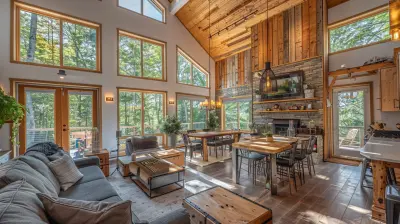
Latest Trends Reshaping the Housing Market in 2026
24 April 2026
Let’s be honest for a second: If you’ve been trying to buy or sell a home recently, you probably feel like you’re trying to solve a Rubik’s Cube while riding a unicycle. The housing market has been doing its best impression of a roller coaster—thrilling, a little nauseating, and full of unexpected twists. But here we are in 2026, and the landscape has shifted yet again. Not in a scary way this time, but in a way that actually makes sense for real people.
So, grab a coffee (or tea, I don’t judge), and let’s walk through what’s actually happening in the housing market right now. I’m talking about the real trends—not the flashy headlines that make you panic. These are the shifts that are changing how we live, where we buy, and even what we call "home."
The End of the "Zoom Town" Era: Welcome to the "Third Space" Revival
Remember 2021? Everyone was fleeing cities for cabins in the woods with spotty Wi-Fi, convinced they’d never need to commute again. Fast forward to 2026, and that narrative has done a complete 180. Not back to the old way, but somewhere smarter.We’re seeing the rise of what urban planners are calling the "Third Space" revival. No, I’m not talking about a sci-fi movie. In sociology, the "third space" is where you go that isn’t home (first space) or work (second space). Think coffee shops, libraries, parks, and local breweries.
In 2026, buyers aren’t just asking, "How big is the kitchen?" They’re asking, "Can I walk to a decent brunch spot?" The pandemic pushed us into our homes, but now we’re craving connection again. The hottest neighborhoods aren’t the ones with the biggest square footage; they’re the ones with walkable, mixed-use communities. Suburbs that built town centers with actual sidewalks and bike lanes are seeing bidding wars. Meanwhile, rural homes that are a 45-minute drive from a grocery store are sitting on the market.
Why does this matter to you? If you’re selling, you need to market your neighborhood’s "third spaces" as aggressively as your granite countertops. If you’re buying, look for areas where you can grab a coffee, hit a yoga class, and buy fresh produce—all on foot. That’s the gold standard now.
The "Boomerang" Migration: Gen Z and Millennials Are Coming Back to the Burbs (But Not the Way You Think)
For years, we heard that young people wanted to live in downtown high-rises with rooftop pools and proximity to nightlife. Then we heard they all wanted tiny houses in the desert. In 2026, the reality is much more nuanced—and honestly, more practical.We’re seeing a massive "boomerang" migration where Gen Z and younger Millennials are moving back to the suburbs—but not the cookie-cutter suburbs their parents lived in. They want "urban burbs" : suburbs that have density, diversity, and a sense of culture, but without the noise and rent prices of the city center.
Think of it like this: The city is the loud party you attend once a month. The rural area is the silent retreat you visit for a weekend. The urban burb is your cozy living room—where you can actually live, work, and have friends over without cleaning up for three days.
These buyers want smaller, more efficient homes (1,200–1,800 square feet is the sweet spot), but they want them on lots that allow for a garden, a dog run, or a tiny ADU (Accessory Dwelling Unit) for aging parents or rental income. They’re trading the "forever home" myth for the "right-now home" reality.
Interest Rates: The Uninvited Guest Who Finally Brought Dessert
Let’s talk about the elephant in the room: interest rates. They’ve been the bad guy in this story for a while, hovering in the 6–7% range and making everyone grumpy. But here’s the twist in 2026: buyers and sellers are finally accepting the new normal.Think of high interest rates like a cold winter. At first, you complain, you hide under blankets, and you refuse to go outside. But eventually, you put on a coat, start the car, and get on with your life. That’s what’s happening now. Buyers are realizing that waiting for rates to drop to 3% again is like waiting for a unicorn to deliver your mail. It’s not happening anytime soon.
So, what’s the creative solution? Seller buydowns and temporary rate adjustments are huge in 2026. Sellers are offering to buy down the buyer’s interest rate for the first two or three years, making the monthly payment more palatable. It’s like the seller saying, "I know this is tough, so let me help you get started."
Also, adjustable-rate mortgages (ARMs) are making a comeback, but in a smarter way. Not the predatory ARMs of 2008, but hybrid ARMs with fixed rates for five or seven years, then a small adjustment. For buyers who plan to move or refinance within that window, it’s a lifeline.
The "Granny Flat" Revolution: ADUs Are the New Must-Have
If you haven’t heard of ADUs yet, you’re about to. An Accessory Dwelling Unit is basically a small, separate living space on the same lot as a single-family home—a converted garage, a basement apartment, or a tiny house in the backyard. In 2026, this isn’t just a trend; it’s becoming a standard feature in new construction.Why? Because the American family has changed. Multigenerational living is on the rise. Adult children are moving back home (or never leaving), aging parents need care, and everyone is looking for a little privacy under the same roof. An ADU solves that beautifully.
But it’s also a financial tool. Homeowners are renting out ADUs as short-term or long-term rentals to offset their own mortgage. In high-cost cities like Los Angeles, Portland, and Denver, an ADU can generate $1,500–$3,000 a month. That’s not pocket change; that’s the difference between making ends meet and thriving.
If you’re house hunting in 2026, ask yourself: "Does this property have ADU potential?" If the answer is yes, you’ve just unlocked a serious asset.
The "Home as a Sanctuary" Trend: Wellness Rooms and Biophilic Design
Okay, let’s get a little philosophical. After the chaos of the last few years, people are redefining what a home is supposed to do. It’s not just a place to sleep and store your stuff. It’s a sanctuary for your mental and physical health.In 2026, the most sought-after home features aren’t the man cave or the home theater. They’re wellness rooms. I’m talking about dedicated spaces for yoga, meditation, or even a cold plunge (yes, the Wim Hof crowd is influencing real estate). Home gyms are no longer a bonus room with a treadmill; they’re full-on fitness studios with rubber flooring, mirrors, and good ventilation.
And then there’s biophilic design—which is a fancy way of saying "bringing the outdoors in." Buyers want homes with natural light, indoor plants, living walls, and materials like wood and stone that feel organic. It’s not just aesthetics; studies show that biophilic design reduces stress and improves cognitive function. So, when you see a house with floor-to-ceiling windows and a garden view, you’re not just buying a view; you’re buying better mental health.
The Rise of the "Home as a Hustle": Mixed-Use Living Is Mainstream
Remember when working from home meant your dining table was your office, and your laptop was on your lap? In 2026, that’s so last decade. The new trend is mixed-use living spaces that blend residential and commercial use right in the same building or development.We’re seeing new construction projects where the ground floor is a coffee shop, a coworking space, or a small retail store, and the upper floors are apartments or condos. This isn’t just for city centers anymore; it’s happening in suburbs too. Developers are creating "live-work-play" communities where you can walk from your apartment to your office (which is just downstairs) to the gym to the grocery store.
For buyers, this means you’re not just buying a home; you’re buying a lifestyle ecosystem. For sellers, it means highlighting the convenience factor—how many errands can you run without getting in your car? That’s the metric that matters.
Smart Home Tech: From Gimmick to Necessity
Five years ago, a "smart home" meant you could turn off your lights with your phone. Cool, but not exactly life-changing. In 2026, smart home technology has matured into something genuinely useful.Think of it like this: In 2015, a smartphone was a novelty. Now, you can’t imagine life without it. The same is happening with home tech. Energy management systems are the big story this year. Smart thermostats that learn your habits, solar panels with battery storage that can power your home during an outage, and smart water heaters that run during off-peak hours to save money.
Buyers are also looking for security integrations that aren’t creepy. Smart doorbells, motion sensors, and cameras that respect privacy but provide peace of mind. And let’s not forget the EV charger—if a home doesn’t have a Level 2 charger in the garage, it’s already outdated. Electric vehicles are hitting the mainstream, and homeowners want to plug in without an expensive retrofit.
The "Fixer-Upper" Is Back (But With a Twist)
Here’s a plot twist: After years of everyone wanting move-in ready homes, the fixer-upper is making a comeback—but not the scary kind. We’re talking about "cosmetic fixers" : homes that need new paint, flooring, or landscaping, but have solid bones (good roof, good foundation, updated electrical).Why the shift? Because buyers are priced out of the "perfect" homes, and they’re realizing that a little sweat equity can save them $50,000–$100,000. Plus, with the popularity of home renovation shows and DIY tutorials on TikTok, people feel more confident tackling projects.
But here’s the twist: Buyers are being smarter about it. They’re not buying a total gut job unless they have a contractor in the family. They want homes that are "ugly but honest"—places where the problems are visible and fixable, not hidden behind fresh drywall. It’s like buying a fixer-upper car that runs well but needs a paint job versus one that has a blown engine. Know the difference.
The "Climate Resilience" Checklist
This is the trend that no one talked about five years ago but everyone is talking about now. In 2026, climate resilience is a major factor in home buying decisions. Buyers are asking hard questions: "Is this home in a flood zone? Has it been retrofitted for earthquakes? What’s the wildfire risk? Is there a backup generator?"This isn’t just about fear; it’s about insurance costs. Home insurance premiums have skyrocketed in disaster-prone areas, and in some states (looking at you, California and Florida), insurers are pulling out entirely. So, a home that’s built to withstand extreme weather isn’t just safer; it’s more affordable to own.
Sellers are responding by investing in resilient upgrades: impact-resistant windows, fireproof roofing materials, sump pumps, and even "rain gardens" that manage stormwater runoff. If you’re buying, ask for a climate risk assessment. It’s becoming as standard as a home inspection.
The "Rent-to-Own" Revolution
Finally, let’s talk about the biggest game-changer for first-time buyers: rent-to-own models are exploding in popularity. Traditional rent-to-own programs used to feel a little sketchy, like buying a used car from a guy in a parking lot. But in 2026, major institutional investors and even some builders are offering legitimate programs.Here’s how it works: You rent a home for 1–3 years with a portion of your monthly rent going toward a future down payment. At the end of the term, you have the option to buy the home at a predetermined price. This gives you time to improve your credit score, save more money, and lock in a purchase price even if the market goes up.
It’s not perfect—you still need to qualify for a mortgage eventually—but for people who have good income but not enough savings, it’s a lifeline. Think of it as training wheels for homeownership. You get to "test drive" the home and the neighborhood before committing.
So, What’s the Bottom Line?
The housing market in 2026 isn’t broken. It’s just different. It’s asking us to be more creative, more patient, and more intentional about what we really need from a home. Gone are the days of buying the biggest house you can barely afford and hoping for the best. Now, it’s about fit, function, and future-proofing.Whether you’re a first-time buyer feeling overwhelmed, a seller wondering how to stand out, or just someone curious about where we’re heading, remember this: The best home isn’t the one that impresses your neighbors. It’s the one that makes you feel safe, connected, and excited to come back to at the end of the day.
And honestly? That’s a trend I can get behind.
all images in this post were generated using AI tools
Category:
Real Estate NewsAuthor:

Kingston Estes
Discussion
rate this article
2 comments
Harley Patterson
As we look to 2026, the housing market is clearly evolving. Sustainability and technology are leading the charge, with energy-efficient homes and smart features becoming necessities. Buyers are prioritizing community amenities, indicating a shift in what defines desirable living spaces.
May 1, 2026 at 4:23 AM
Kingston Estes
Absolutely! The focus on sustainability and technology is transforming what buyers want. It's exciting to see how community features are becoming essential in shaping modern living.
Tiffany McFarlane
Space unicorns now a must-have feature!
April 27, 2026 at 2:28 AM
Kingston Estes
Space unicorns could definitely add a unique twist to home design. Who wouldn't want a magical touch in their living space?